• Skip to main content
  • Skip to footer

re-think.nu

  • About
    • Film
    • About Us
    • We are ReThink
    • Blog
      • Categories
        • Textile production
        • Textile consumption
        • Textile Recycling
        • Biodiversity & Ecosystem
        • Natural Resources
        • The Earth Spheres
        • Water
        • Organic
        • Chemicals
        • ReThink – Think Again
    • Tips
    • Links & Sources
      • Links
      • Textile Sources
      • Small Animals Sources
      • Plant Sources
      • Fungi Sources
  • TEXTILES
    • Textile Knowledge
    • Textile Recycling
    • Textile Dictionary
    • Rethink Fabric – Series
    • Fact Sheets
  • BIODIVERSITY
    • Small Animals
      • Small Animals Knowledge
      • Small Animals Dictionary
      • Small Animals Series
      • Small Animals Films
    • Plants
      • Plant Knowledge
      • Plant Dictionary
      • Think About Plants – The Spruce Tale
      • Films About Plants
    • Fungi
      • Fungi Knowledge
      • Fungi Dictionary
      • Fungi Film
      • ReThink Fungi
    • Microorganisms
  • Earth
    • Earth’s Spheres
    • Ecosystem – Biosphere
    • Resource Extraction – Industry
    • Earth Dictionary
  • DICTIONARY
  • CONTACT
    • Press
    • Support Us
    • Become a Member
    • Privacy policy
    • Donations & sponsorship
    • Collaborations
      • SIDA
      • Nature Conservation Society
      • Fabric to Fabric
      • Keep Sweden Clean
      • University of Linköping
  • Swedish
  • Instagram
  • Facebook
  • Youtube
  • Linkedin

Weaving

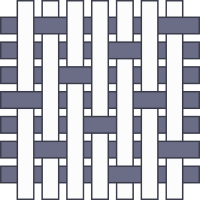
Weaving is a production method for making fabric by interlacing two perpendicular thread systems—warp and weft. Unless woven with elastane or lycra, weaving produces a stiff fabric, unlike knitting, which is more elastic.

Warp are the longitudinal vertical threads of a fabric, i.e. those in the loom or weaving machine.
Weft are the transverse horizontal threads inserted between the warp, and bind the threads together into a weave.

There are three basic bindings in weaving: two-shaft, twill, and satin. All other weaving methods are based on variations of one of these three

Two-shaft
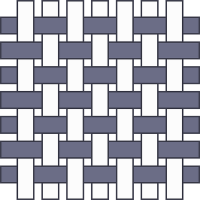
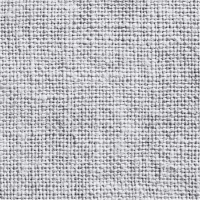
Two-shaft, called single weave, is the simplest and most commonly used. The warp and weft threads cross in this weave, alternating over and under each other. Therefore, it is the same on both sides.

Percale, seersucker, and canvas are examples of fabrics woven in twill. Twill variants also include basket weave and Oxford.
Twill
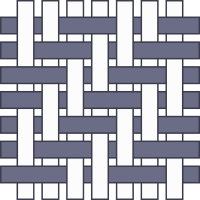
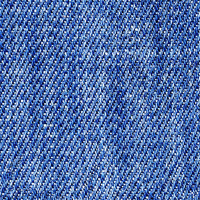
Twill is a weaving method that produces diagonal stripes on the fabric’s surface. When the warp threads pass over or under at least two weft threads and the weaving point shifts sideways with each weft, diagonal stripes are created.

Denim, twill, tweed, flannel and gabardine are examples of twill fabrics. Herringbone is also a variant of twill.
Satin
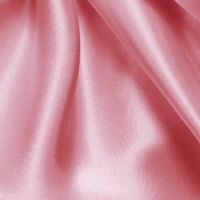
Satin is similar to twill, but the binding points are spaced apart so that the clear diagonal line is lost, and the fabric is dense, smooth, and lustrous. In the most common form of satin, the warp threads pass first under one and then over four weft threads.

Duchesse is woven in satin and is a popular fabric for formal wear.
January 2024, TÄNKOM | Revised March 2024 RETHINK

Footer

  • Blog
  • ABOUT
  • Global Goals
  • Collaborations
  • About Us
  • Press
  • Instagram
  • Facebook
  • Youtube
  • Linkedin

Partly financed by

© re-think.nu | 2026

Copyright © 2026 · Atmosphere Pro on Genesis Framework · WordPress · Log in