ReThink/TänkOm is an idealistic non-profit environmental organisation surrounded by strong, knowledgeable, inspiring and differentiated competence in the subject areas.
Do You Want to Become One of Us?
Are you also passionate about sustainability and curious about what ReThink is all about? Get in touch at info@re-think.nu
Stina
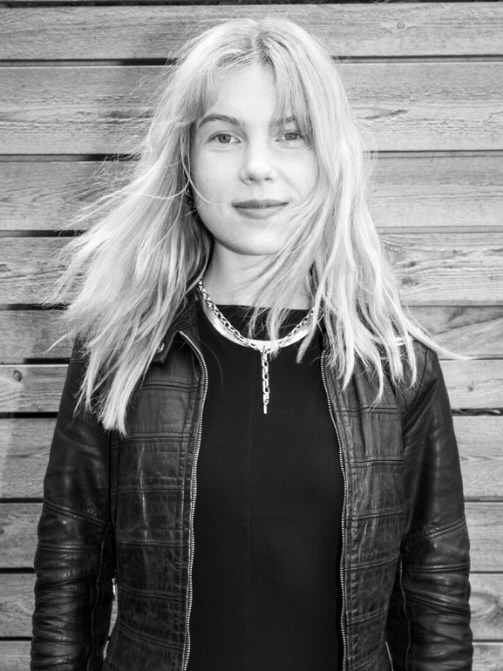
I am a knitwear designer and pattern maker. The reason I started working in fashion was to contribute to more sustainable ways of making clothes and to challenge the fast-fashion industry.
Having grown up in Åre, Sweden, nature has always been a key part of my life. As winters become milder, I feel a sense of unease and have become more involved in environmental issues. By reading research and reports, I have gained a deeper understanding of the challenges we face.
ReThink provides an opportunity to share knowledge about textiles and the fashion industry’s impact in a simple, educational way. With increased knowledge, it becomes easier to make conscious choices and create real change.
Luna

I love fashion, the feeling of new clothes in my wardrobe, but I also love nature. I live on a countryside farm with lots of animals and have done so for most of my life. My favourite activity is horseback riding and discovering new, beautiful trails where the landscape opens up and reveals its different sides.
For me, fashion is not just about clothes, but about identity, creativity, and values. Growing up close to animals and nature has given me a deep respect for all living things and an understanding of how dependent we humans are on healthy ecosystems. Horses have taught me responsibility, presence, and interaction, values that I also bring to my view of fashion and consumption.
This combination has become my driving force, combining fashion with care for nature and animals. I believe in a future where creativity and sustainability go hand in hand, and where our choices are both beautiful and well-thought-out. That is why I am part of Tänk Om / ReThink.
Noak

My great passion in life is skiing, which has given me a natural feeling of belonging in nature. Winter has always been my favourite season, because that’s when I can do what I love most.
That is also what prompted my interest in the environment; I have seen for myself how winters are changing and realised how important it is that we respect the earth’s boundaries.
Getting involved with TänkOm/ReThink, therefore, feels like an obvious choice. Textiles are something we all need and use every day, yet their environmental impact does not receive as much attention as other sectors.
I want to be a part of raising awareness about this issue so that I can keep doing what I love. Because if we don’t rethink now, we risk losing more than just snow.
Elvira
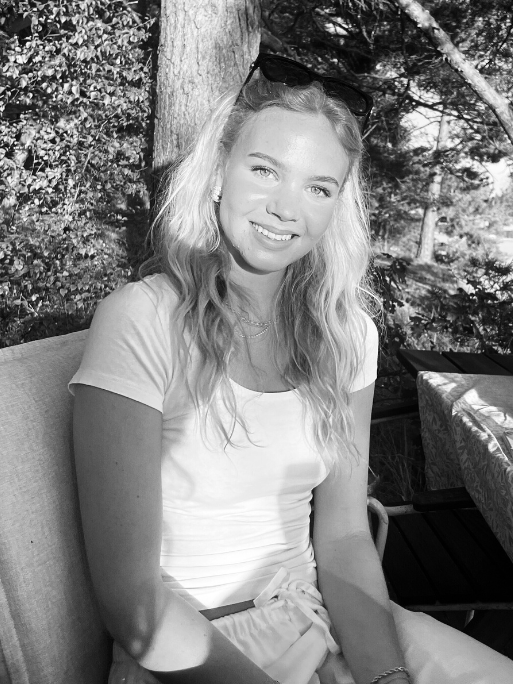
I have always been fascinated by fashion and how a garment can reflect a person and their story. For me, fashion is not about fast trends, but about craftsmanship and the feel of clothes that are made with quality natural materials such as wool and cotton.
As I gained a deeper understanding of the fashion industry, I also came to understand its significant impact on the environment. To spread knowledge within the field and to choose quality over quantity is a way for me to show respect for the resources we borrow from the earth.
By getting involved with TänkOm/ReThink, I hope to encourage more people to discover the value of a sustainable wardrobe, so fashion can continue to be a creative force that works hand in hand with nature.
Knowledge & Research
Elin Isaksson Nordling

I am a multidisciplinary designer with a background in product design. My focus is on sustainable and environmentally friendly design. I work mainly with wood materials and create illustrations and art.
My most significant designs have applied a critical perspective to raise awareness of issues that are not well-known. My work aims to develop designs that maintain the earth’s resources while maximising the use of materials.
Competence/ skills: material-driven and sustainable design in product and furniture design. I think material knowledge is an essential basis for making environmentally friendly decisions. Through my involvement in ReThink, I want to help create the conditions for consumers to make sustainable choices actively.
Amelie Cardell

Journalist and writer with a big heart for nature. Certified forest bathing guide and a nature guide with recent university studies in sustainable community development and forest issues.
That nature is a fantastic place for recovery and increased well-being is something that many people know. It is also supported by research. So I want my work to inspire more people to get out into the woods and fields. We hope that enjoying nature more will increase our care for the environment.
TankOm/ReThink has a stated vision about protecting biodiversity. I think that question is one of the most important for humanity to focus on right now. By writing texts about the fascinating interaction between different species, I hope to increase knowledge, understanding and respect for our nature.
Jenny Persson
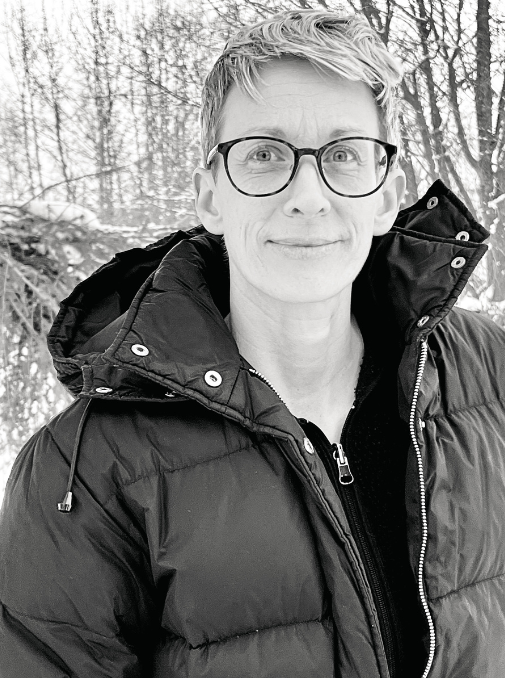
I am an environmental scientist passionate about nature, animals, health, design and creative expressions. I have worked for many years across various commercial sectors, as well as in sewing, administration, project management, proofreading, and layout.
Textiles are especially close to my heart, and they have given me experience in everything from design and pattern construction to cutting, sewing, retailing, and upcycling.
Working in a clothing store and observing the high volume of goods makes you think about how we use Earth’s resources and how we live our lives. Living in and with nature should be natural, but in today’s consumer society, we have lost touch with nature and ourselves. And thus, also the understanding of how everything is connected. I want to change that. ReThink focuses on the holistic approach. On consequential thinking. What happens if I choose this instead of that? To spread knowledge that enables understanding of nature and how we can live in harmony with it.
Bente Nilssen
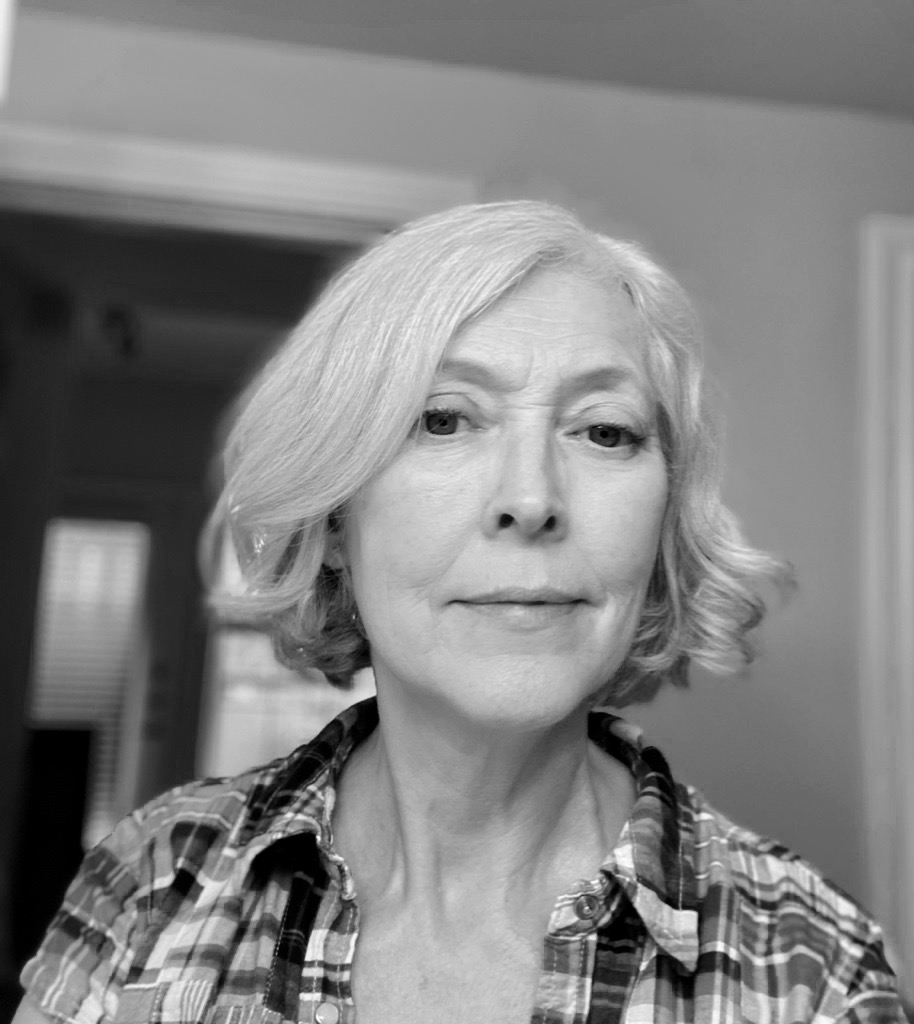
As a fashion designer, I feel responsible for making sure my work is in balance with the environment. Given the fashion industry’s status as one of the most influential, dynamic, and impactful sectors, it should lead the transition to more sustainable and ethical practices.
Joining TankOm/ReThink as a translator and editor enables me to engage and empower young learners globally, aligning with my mission to advocate for a more responsible future. I am Norwegian and live in Austin, Texas. With a fashion degree from Paris and global experience, I’ve witnessed the impact.
After a life-altering accident prompted me to end my design business, I now breathe new life into unwanted objects and redesign existing clothes. I am thrilled to be a part of this community, which includes passionate writers, designers, academics, scientists and people from the textile industry. Together, we raise awareness and inspire young learners to look for possibilities and put nature and equity first.
Kina Strandberg

For me, TankOm/ReThink is a way of re-learning. With knowledge comes change. We must have change. Small steps towards changed behaviour, regardless of the business owner, decision-maker, or consumer. When many people change a little, a lot happens.
As a market economist and entrepreneur, I want to contribute to ReThink by teaching more people than me to open their eyes to biological diversity. Textiles are with us almost everywhere, making it easy to see the whole when we look a little closer at what they are and what affects them. Stay tuned! We learn together towards change.
Åsa Strandberg
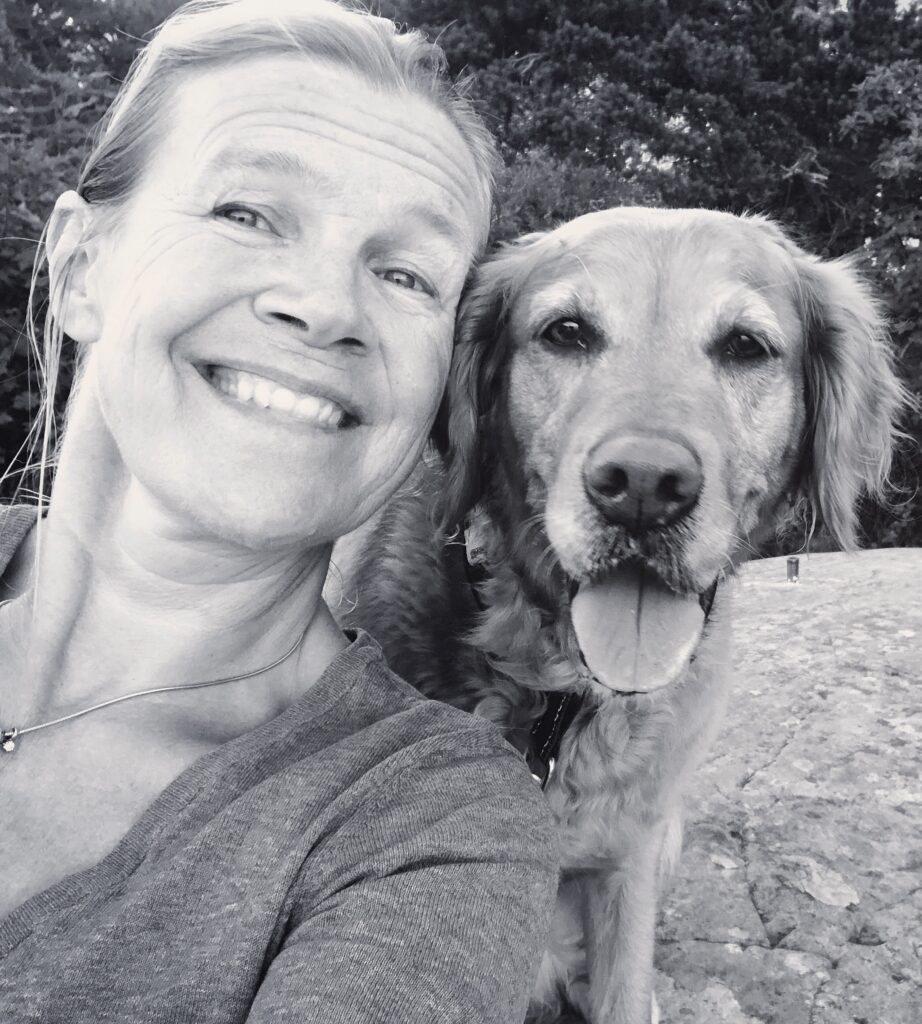
Animals and nature have always been close to my heart. At the same time, textiles, as fashion and workwear, have been a big part of my professional life. I have always had a deep respect and fascination for nature’s power, innocence, beauty, and, not least, resilience. These qualities have guided me through my career and inspired me to challenge the textile industry’s consumption patterns.
After more than 30 years in the textile industry and the last 14 years as an entrepreneur, my ultimate goal has been to make textiles circular. Why shouldn’t they be recycled in the same way as glass, aluminium, and paper? We pushed this vision forward through collaborations with academia and different industries, from weaving to automotive. But it’s not just about recycling; it’s just as much about understanding how the various fibres in textiles affect the environment during manufacturing and their degradability.
While the complexity of these issues may seem daunting, understanding the connections – the origin of materials and their impact – can make a significant difference. Perhaps you become curious and want to delve deeper, becoming an expert in a specific field.
I am convinced that we need more people to understand these connections, so we founded TänkOm in 2018 to spread knowledge about the impact of textiles on nature and its biodiversity, woven together in endless ecosystems.
Hire us!
Do you need help with sustainable choices in your path? Everything from lectures on the connection between textiles and biological diversity, product life cycle analyses, forest baths, and design & creation. We also put together arrangements with sustainability at the centre.
Feel free to contact us at info@re-think.nu
Reference group
To help us ensure that the information we teach aligns with science and other research, we have a reference group. In addition, if subjects fall outside their area of competence, they can call on colleagues for help.
Oliver Karlöf, Fish Biologist
Oliver Karlöf is a fisheries consultant in Stockholm and has also written the books “Discoveries in Stockholm’s Nature” (2018) and “Unusual Food Fungi” (2022). Spreading knowledge about biology and ecology is close to his heart and pervades work and leisure. Finding exciting, untapped raw materials in the forest and the sea is also something Oliver finds both fun and important. To avoid depleting our fish populations, we need to change the way we look at the ocean’s resources, and one step in this is to pay attention to unutilised fish, crustaceans, algae and sponges, species that we today overlook entirely and that we can use sustainably. This shift is not just fun and tasty, but necessary if our ecosystems are to remain in balance and provide the enormous benefits we take for granted today.
Oliver Karlöf 
Sonja Leidenberger, Högskolan i Skövde
As an associate professor and researcher at the University of Skövde, Sonja Leidenberger focuses on ecological issues. Aquatic and invasive species, as well as bees, are her target organisms. She has experience leading national and international research projects, as well as communicating her research to researchers (through various scientific articles), decision-makers in the field (Naturvårdsverket, county boards), and the public (popular science articles, contributions to TV programs, radio, and newspapers).
Sonja Leidenberger
“Any dissemination of knowledge about why we need to obtain biological diversity is an important contribution. However, the textile industry still has much work to do to become more sustainable, which is why I like the ReThink initiative, which is a first and important step in that direction.”
Elena Gorokhova, Stockholms University
I am a researcher and teacher at the “Exposure & Effects” unit at the Department of Environmental Science. We are the ones who create ideas and develop solutions that help us reduce the impact of chemicals on the environment and people. We know that new environmental toxins are constantly being discovered, and other stressors, such as global climate change, are always present. If we have more knowledge about how and why animals and people are affected, we can also act: adapt, be prepared and try to mitigate the effects. Thus, research and initiatives like ReThink can make a huge difference.
Elena Gorokhova


