• Skip to main content
  • Skip to footer

re-think.nu

  • About
    • Film
    • About Us
    • We are ReThink
    • Blog
      • Categories
        • Textile production
        • Textile consumption
        • Textile Recycling
        • Biodiversity & Ecosystem
        • Natural Resources
        • The Earth Spheres
        • Water
        • Organic
        • Chemicals
        • ReThink – Think Again
    • Tips
    • Links & Sources
      • Links
      • Textile Sources
      • Small Animals Sources
      • Plant Sources
      • Fungi Sources
  • TEXTILES
    • Textile Knowledge
    • Textile Recycling
    • Textile Dictionary
    • Rethink Fabric – Series
    • Fact Sheets
  • BIODIVERSITY
    • Small Animals
      • Small Animals Knowledge
      • Small Animals Dictionary
      • Small Animals Series
      • Small Animals Films
    • Plants
      • Plant Knowledge
      • Plant Dictionary
      • Think About Plants – The Spruce Tale
      • Films About Plants
    • Fungi
      • Fungi Knowledge
      • Fungi Dictionary
      • Fungi Film
      • ReThink Fungi
    • Microorganisms
  • Earth
    • Earth’s Spheres
    • Ecosystem – Biosphere
    • Resource Extraction – Industry
    • Earth Dictionary
  • DICTIONARY
  • CONTACT
    • Press
    • Support Us
    • Become a Member
    • Privacy policy
    • Donations & sponsorship
    • Collaborations
      • SIDA
      • Nature Conservation Society
      • Fabric to Fabric
      • Keep Sweden Clean
      • University of Linköping
  • Swedish
  • Instagram
  • Facebook
  • Youtube
  • Linkedin

chemicals

What Kind of Clothes Are Made From Trees?

16 March, 2020 by asas

We love clothes, right? Global clothing consumption has increased avalanche-like in the last ten years, partly due to an ever-increasing international middle class. Where should all the material come from to cover the increased demand? A future fibre is neither …

Water colored by the season of fashion

26 November, 2019 by asas

Water! Vital for humans, plants, and animals. Imagine that the earth – the blue planet – consists of about 70% water. Of that, only about 3% is freshwater; we can use only 1% as glaciers bound 2%. We find this …

When Farm Animals Thrive, the Need for Chemicals Decreases

28 October, 2019 by asas

How would you react if a double-tail suddenly came crawling over your foot? For example, the double tail has a fantastic task as a pest controller in our orchards. A single double-tail insect can eat thousands of aphids during its …

Is Insecticide-Free Cotton Possible?

10 October, 2019 by asas

Honey bees produce honey and earthworms break down our compost – this is knowledge many of us know. But did you know that a ladybug can eat up to 2500 aphids during its lifetime? Or that flower flies are important pollinators? Without all …

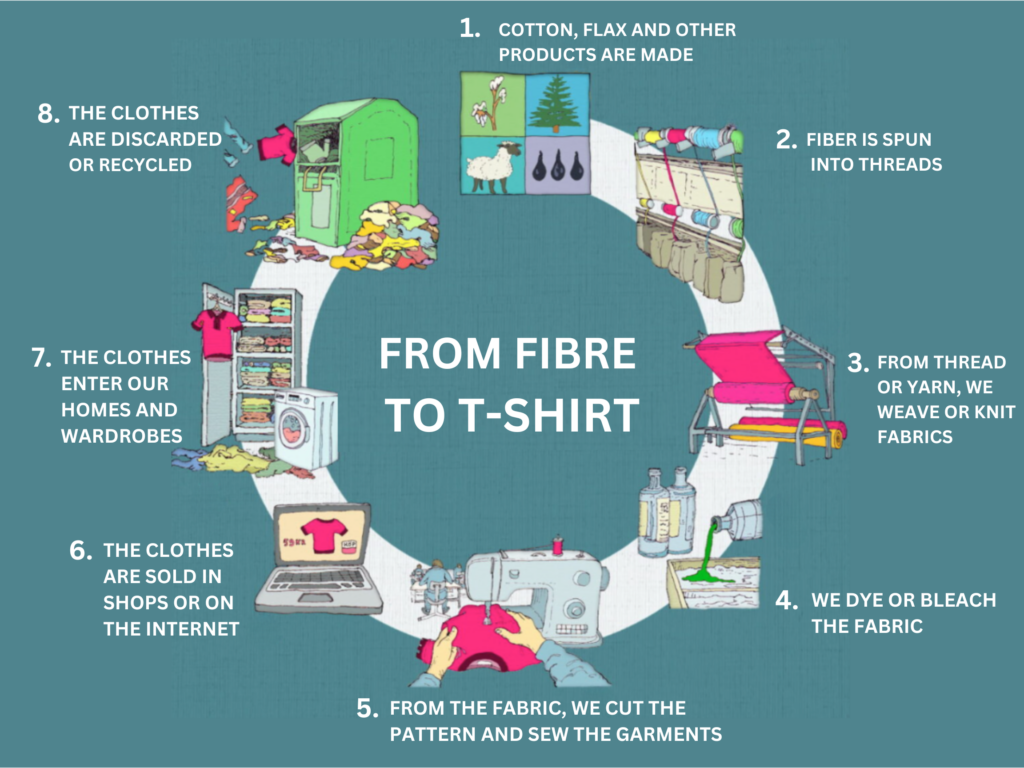
Learn about Textiles – from Fibre to T-shirt
1 October, 2019 by asas

Circle of clothing from earth to earth

Last week we talked about how cotton production affects the environment. During the autumn, we will continue to describe the consequences of the textile industry’s manufacturing processes, including how chemicals affect the entire ecosystem. Of course, we also tell you how we …

Exploring the Cotton Industry: A Quick Overview

23 September, 2019 by asas

Cotton, a problem for the whole world. Pesticides destroy our planet

We have talked about cotton production and how it affects both nature and animals, including humans. But what does the industry itself look like?

Cotton is the most widely used natural fibre, grown in eighty countries in many parts of …

  • Go to page 1
  • Go to page 2
  • Go to Next Page »

Footer

  • Blog
  • ABOUT
  • Global Goals
  • Collaborations
  • About Us
  • Press
  • Instagram
  • Facebook
  • Youtube
  • Linkedin

Partly financed by

© re-think.nu | 2026

Copyright © 2026 · Atmosphere Pro on Genesis Framework · WordPress · Log in