• Skip to main content
  • Skip to footer

re-think.nu

  • About
    • Film
    • About Us
    • We are ReThink
    • Blog
      • Categories
        • Textile production
        • Textile consumption
        • Textile Recycling
        • Biodiversity & Ecosystem
        • Natural Resources
        • The Earth Spheres
        • Water
        • Organic
        • Chemicals
        • ReThink – Think Again
    • Tips
    • Links & Sources
      • Links
      • Textile Sources
      • Small Animals Sources
      • Plant Sources
      • Fungi Sources
  • TEXTILES
    • Textile Knowledge
    • Textile Recycling
    • Textile Dictionary
    • Rethink Fabric – Series
    • Fact Sheets
  • BIODIVERSITY
    • Small Animals
      • Small Animals Knowledge
      • Small Animals Dictionary
      • Small Animals Series
      • Small Animals Films
    • Plants
      • Plant Knowledge
      • Plant Dictionary
      • Think About Plants – The Spruce Tale
      • Films About Plants
    • Fungi
      • Fungi Knowledge
      • Fungi Dictionary
      • Fungi Film
      • ReThink Fungi
    • Microorganisms
  • Earth
    • Earth’s Spheres
    • Ecosystem – Biosphere
    • Resource Extraction – Industry
    • Earth Dictionary
  • DICTIONARY
  • CONTACT
    • Press
    • Support Us
    • Become a Member
    • Privacy policy
    • Donations & sponsorship
    • Collaborations
      • SIDA
      • Nature Conservation Society
      • Fabric to Fabric
      • Keep Sweden Clean
      • University of Linköping
  • Swedish
  • Instagram
  • Facebook
  • Youtube
  • Linkedin

Why is organic cotton so much better?

28 November, 2018 by admin

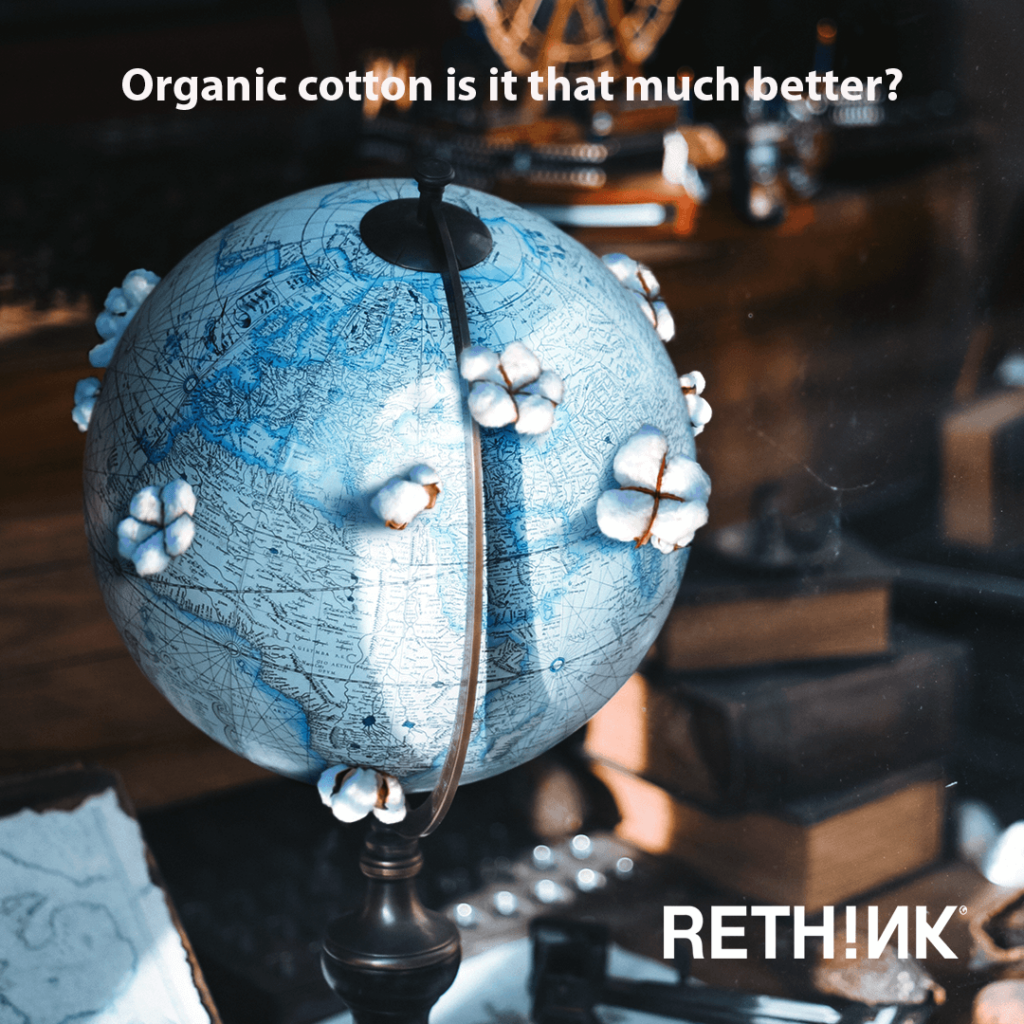
A globe in a dark room with cotton balls

No more environmental anxiety – or at least something less. Do you feel bad about how we treat our planet Earth, the only one? Take a deep breath, start small, learn more, and make better decisions.

Cotton is our most beloved choice of material in clothing and home furnishings. Growing cotton requires enormous amounts of water and chemicals. Also, we make synthetic materials from fossil oil that is not renewable. The cotton plant is both thirsty and sensitive. Growing one kg of conventional cotton takes up to 28,000 litres of water and up to three kg of chemicals.

THAT’S WHY ORGANIC-PRODUCED MATERIALS ARE SO MUCH BETTER:

1. Crop rotation.

Crop rotation means switching which crops are grown on the land yearly. Different crops require different types of nutrients, and by changing, we protect the soil from being drained of essential minerals and nutrients.

2. Minimize tillage.

Tillage includes all different types of arable land cultivation, such as ploughing and harrowing.

3. Cover crops.

A cover crop is a plant we use primarily to slow erosion, improve soil health, enhance water availability, smother weeds, help control pests and diseases, increase biodiversity and bring other benefits to your farmland.

Filed Under: Environmental impact, Organic, Plant Fibers, Textile production Tagged With: cotton, Crop rotation, growing cotton, increase biodiversity, Minimize tillage, organic cotton, slow erosion

« Previous Post
Next Post »

Footer

  • Blog
  • ABOUT
  • Global Goals
  • Collaborations
  • About Us
  • Press
  • Instagram
  • Facebook
  • Youtube
  • Linkedin

Partly financed by

© re-think.nu | 2026

Copyright © 2026 · Atmosphere Pro on Genesis Framework · WordPress · Log in