
• Skip to main content
  • Skip to footer

re-think.nu

  • About
    • Film
    • About Us
    • We are ReThink
    • Blog
      • Categories
        • Textile production
        • Textile consumption
        • Textile Recycling
        • Biodiversity & Ecosystem
        • Natural Resources
        • The Earth Spheres
        • Water
        • Organic
        • Chemicals
        • ReThink – Think Again
    • Tips
    • Links & Sources
      • Links
      • Textile Sources
      • Small Animals Sources
      • Plant Sources
      • Fungi Sources
  • TEXTILES
    • Textile Knowledge
    • Textile Recycling
    • Textile Dictionary
    • Rethink Fabric – Series
    • Fact Sheets
  • BIODIVERSITY
    • Small Animals
      • Small Animals Knowledge
      • Small Animals Dictionary
      • Small Animals Series
      • Small Animals Films
    • Plants
      • Plant Knowledge
      • Plant Dictionary
      • Think About Plants – The Spruce Tale
      • Films About Plants
    • Fungi
      • Fungi Knowledge
      • Fungi Dictionary
      • Fungi Film
      • ReThink Fungi
    • Microorganisms
  • Earth
    • Earth’s Spheres
    • Ecosystem – Biosphere
    • Resource Extraction – Industry
    • Earth Dictionary
  • DICTIONARY
  • CONTACT
    • Press
    • Support Us
    • Become a Member
    • Privacy policy
    • Donations & sponsorship
    • Collaborations
      • SIDA
      • Nature Conservation Society
      • Fabric to Fabric
      • Keep Sweden Clean
      • University of Linköping
  • Swedish
  • Instagram
  • Facebook
  • Youtube
  • Linkedin

Help! I have nothing to wear!

30 November, 2018 by admin

nothing to wear even if the closet is filled up

Did you know that we Swedes buy an average of 14 kilos of textiles per person yearly? Of these 14, 10 kilos are clothing. How many of the garments do you actually use?

We use an average of two-thirds of all our clothes in our wardrobe. Today, we use our clothes on average 36 per cent fewer times than 15 years ago.

THREE SHOPPING TIPS:

Next time you stand in the rehearsal room, think about:

  • Do I need this garment?
  • How often will I use this garment?
  • What material is the garment made of?

WHAT CAN YOU DO INSTEAD OF BUYING NEW?
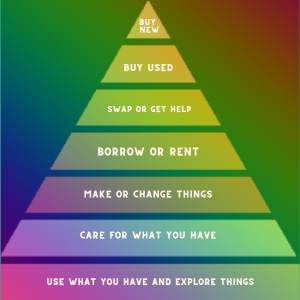
WHAT CAN YOU DO INSTEAD OF BUYING NEW

Use what you already have and experience things instead: It’s tempting to buy new, but do you need another sweater? You do not use 1/3 of what you buy. Please save your money or use it for experiences instead.

Take care of your clothes:  Adhere to the washing guidelines, avoiding temperatures higher than recommended. Wash only when necessary; you can mostly remove minor stains manually. Avoid tumble-drying, as it accelerates wear and fading.

Repair and sew: Redesign your clothes and make them like new ones. If you can not sew, you may be able to ask someone or consider the option of handing in your clothes to a tailor.

Borrow and rent: If you need a garment for a specific occasion, borrow it from a friend or rent the coat for the wedding.

Change or get help:  Your friend’s sweater might be just the new garment you want and vice versa.

Buy Used: If you need to buy, find that extra fine brand in any second-hand retailer.

Buy new: should be your last resort. Twenty-four full baths with water are required to produce a single t-shirt. Try to buy organic clothes that are eco-labelled.

Filed Under: Textile consumption Tagged With: fading, organic clothes, redesign, stains, tumble-drying

« Previous Post
Next Post »

Footer

  • Blog
  • ABOUT
  • Global Goals
  • Collaborations
  • About Us
  • Press
  • Instagram
  • Facebook
  • Youtube
  • Linkedin

Partly financed by

© re-think.nu | 2026

Copyright © 2026 · Atmosphere Pro on Genesis Framework · WordPress · Log in