• Skip to main content
  • Skip to footer

re-think.nu

  • About
    • Film
    • About Us
    • We are ReThink
    • Blog
      • Categories
        • Textile production
        • Textile consumption
        • Textile Recycling
        • Biodiversity & Ecosystem
        • Natural Resources
        • The Earth Spheres
        • Water
        • Organic
        • Chemicals
        • ReThink – Think Again
    • Tips
    • Links & Sources
      • Links
      • Textile Sources
      • Small Animals Sources
      • Plant Sources
      • Fungi Sources
  • TEXTILES
    • Textile Knowledge
    • Textile Recycling
    • Textile Dictionary
    • Rethink Fabric – Series
    • Fact Sheets
  • BIODIVERSITY
    • Small Animals
      • Small Animals Knowledge
      • Small Animals Dictionary
      • Small Animals Series
      • Small Animals Films
    • Plants
      • Plant Knowledge
      • Plant Dictionary
      • Think About Plants – The Spruce Tale
      • Films About Plants
    • Fungi
      • Fungi Knowledge
      • Fungi Dictionary
      • Fungi Film
      • ReThink Fungi
    • Microorganisms
  • Earth
    • Earth’s Spheres
    • Ecosystem – Biosphere
    • Resource Extraction – Industry
    • Earth Dictionary
  • DICTIONARY
  • CONTACT
    • Press
    • Support Us
    • Become a Member
    • Privacy policy
    • Donations & sponsorship
    • Collaborations
      • SIDA
      • Nature Conservation Society
      • Fabric to Fabric
      • Keep Sweden Clean
      • University of Linköping
  • Swedish
  • Instagram
  • Facebook
  • Youtube
  • Linkedin

cotton

Textile Knowledge

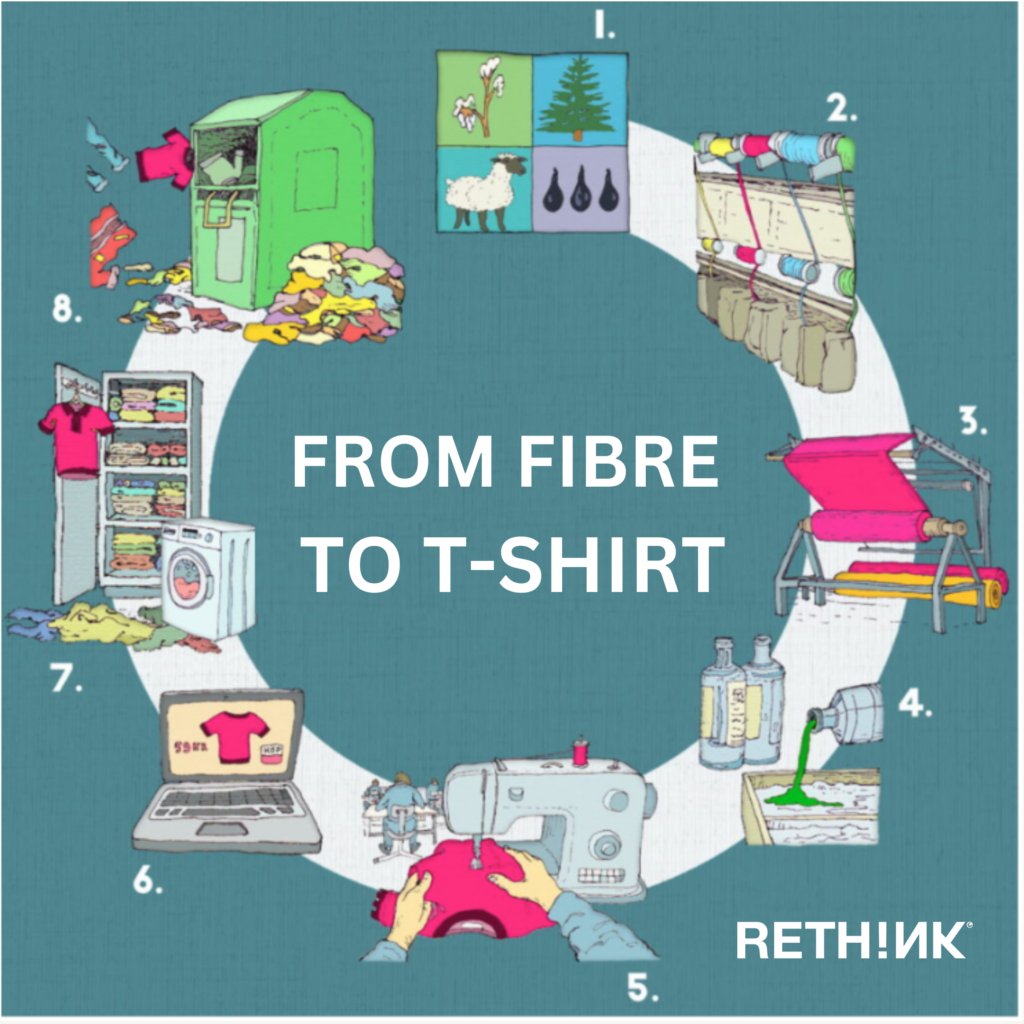
Circle of clothing from earth to earth

STEP 1.
RAW MATERIAL FOR TEXTILE MATERIALS

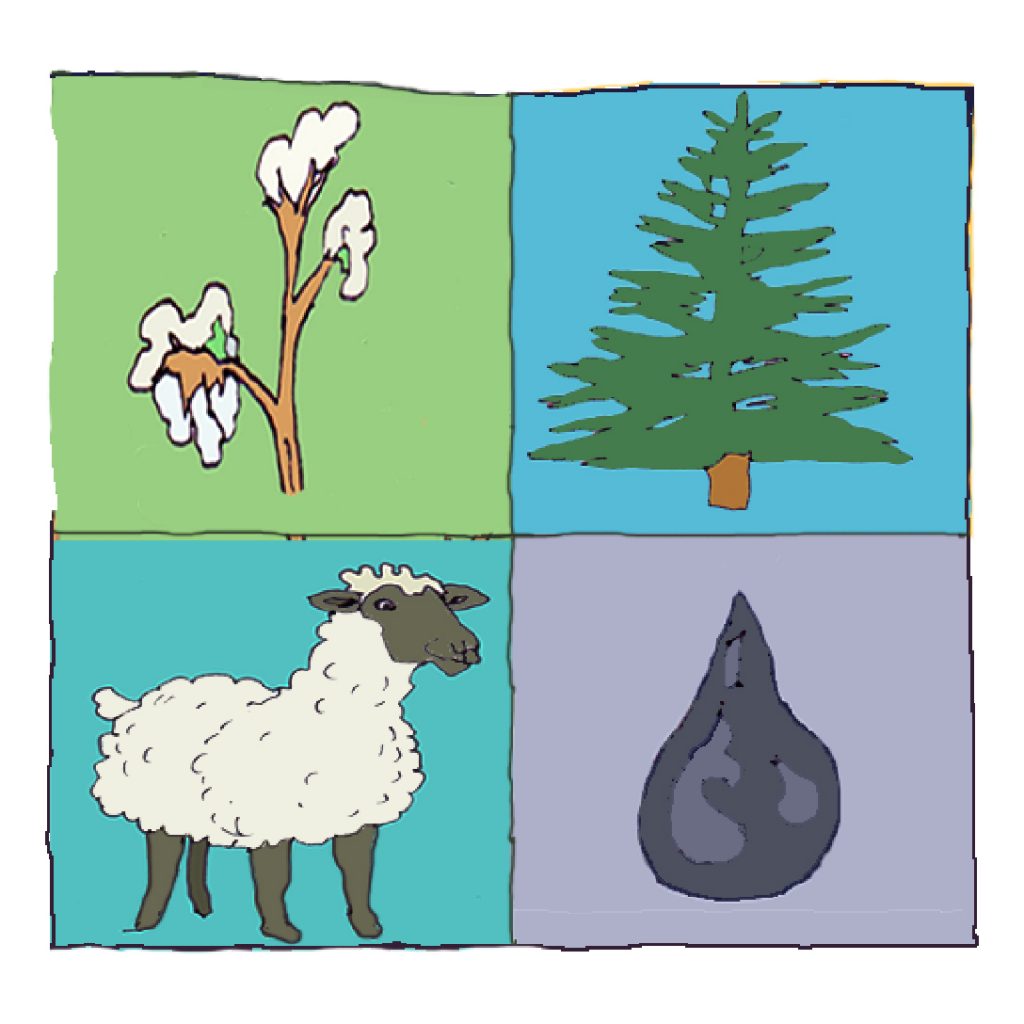
four squares stacked in a quadrat. Green background with cotton plant on upper left, blue background with green pine tree epper right. The bottom two squares have a blue square with a white lamb on left side and a black drop of oil with violet background on the right square.

Many different textile materials are involved when making our clothes. For example, cotton, linen, wool, viscose, and polyester often consist of mixtures of two or more textile fibres. Textile fibre

…

Why is it so Difficult to Recycle Clothes?

2 March, 2020 by asas

“Clothes made from recycled materials”, “XX releases a new collection of recycled clothes”, and “Recycled clothes become new again”.
Headlines about recycled textiles and clothes are overflowing the internet. But in fact, only 1% of everything handed in for recycling …

Do You Know Where Your Drinking Water Comes from?

6 January, 2020 by asas

In Sweden, about half of all drinking water comes from groundwater sources. Groundwater is the water that is stored underground, including in large water-filled cavities called aquifers. It is formed by rain, snow, and meltwater precipitation, slowly penetrating through the …

We can save the world’s lakes and seas!

10 January, 2019 by asas

IMAGINE A LAKE TWELVE TIMES LARGER THAN SWEDEN’S LARGEST, LAKE VÄNERN. WE ARE REFERRING TO THE ARAL SEA, LOCATED IN CENTRAL ASIA. IT WAS ONCE THE WORLD’S FOURTH-LARGEST LAKE, TEEMING WITH A DIVERSE ECOSYSTEM OF ANIMALS, BIRDS AND FISH. THE

…

Why is organic cotton so much better?

28 November, 2018 by admin

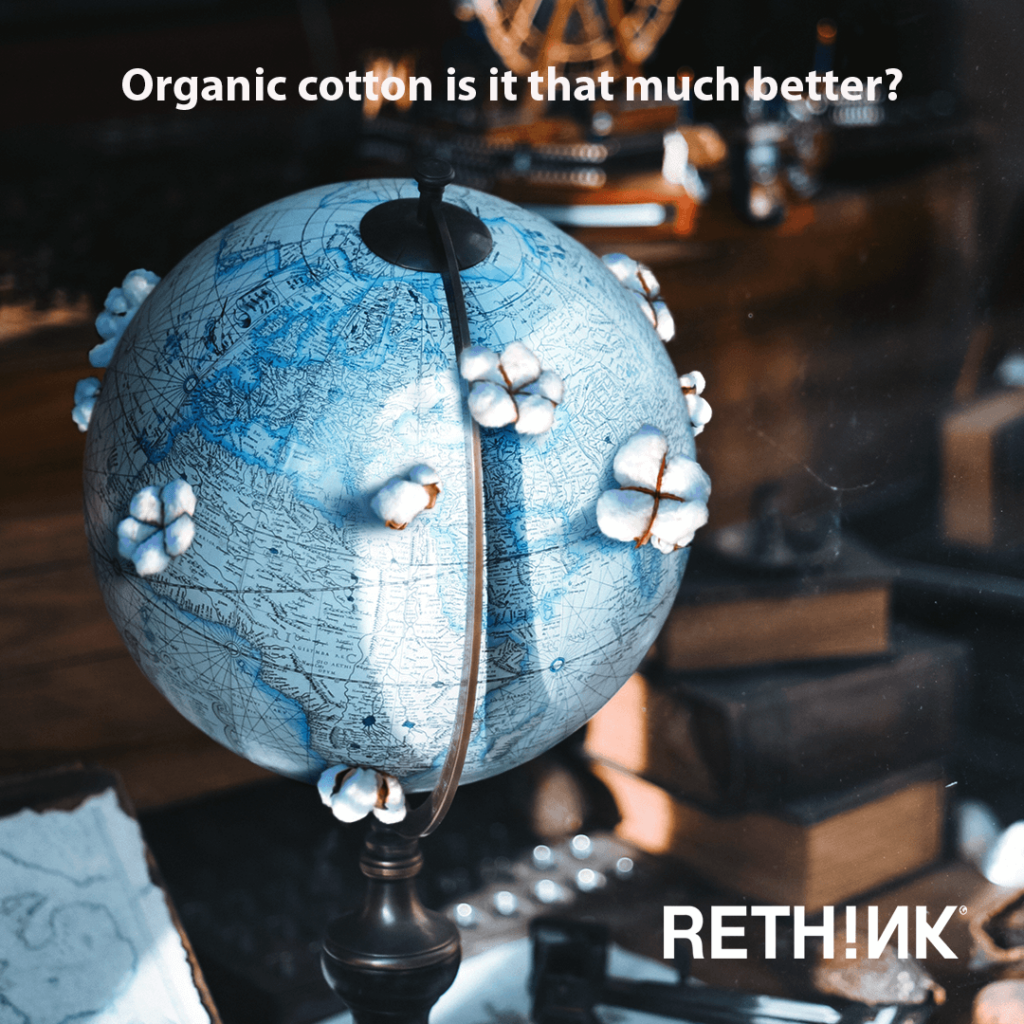
A globe in a dark room with cotton balls

No more environmental anxiety – or at least something less. Do you feel bad about how we treat our planet Earth, the only one? Take a deep breath, start small, learn more, and make better decisions.

Cotton is our most …

No water – no life!
23 November, 2018 by admin

Water needed for all life

Did you know that about 97 per cent of all water on earth is saltwater found in the oceans? Of the rest, two per cent is bound in ice and glaciers. And only about 1 per cent is available to

…

Footer

  • Blog
  • ABOUT
  • Global Goals
  • Collaborations
  • About Us
  • Press
  • Instagram
  • Facebook
  • Youtube
  • Linkedin

Partly financed by

© re-think.nu | 2026

Copyright © 2026 · Atmosphere Pro on Genesis Framework · WordPress · Log in