There are two types of vascular tissue inside the stem of vascular plants: xylem and phloem, which act as the plant’s transport system.
The xylem is located furthest inwards, closest to the centre of these two tissues, and consists of dead, hollow cells that form tubes. This is where water and minerals are transported from the roots up to the leaves. It is a one-way transport process made possible by high pressure generated by the roots using water. It is these cells that form the wood in trees and shrubs.
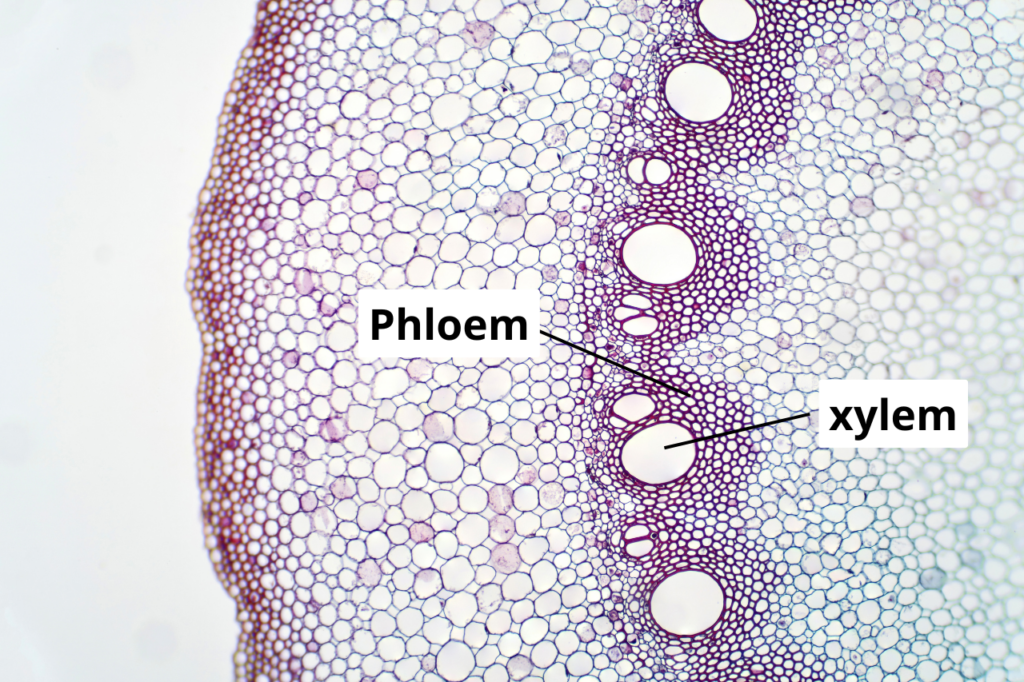
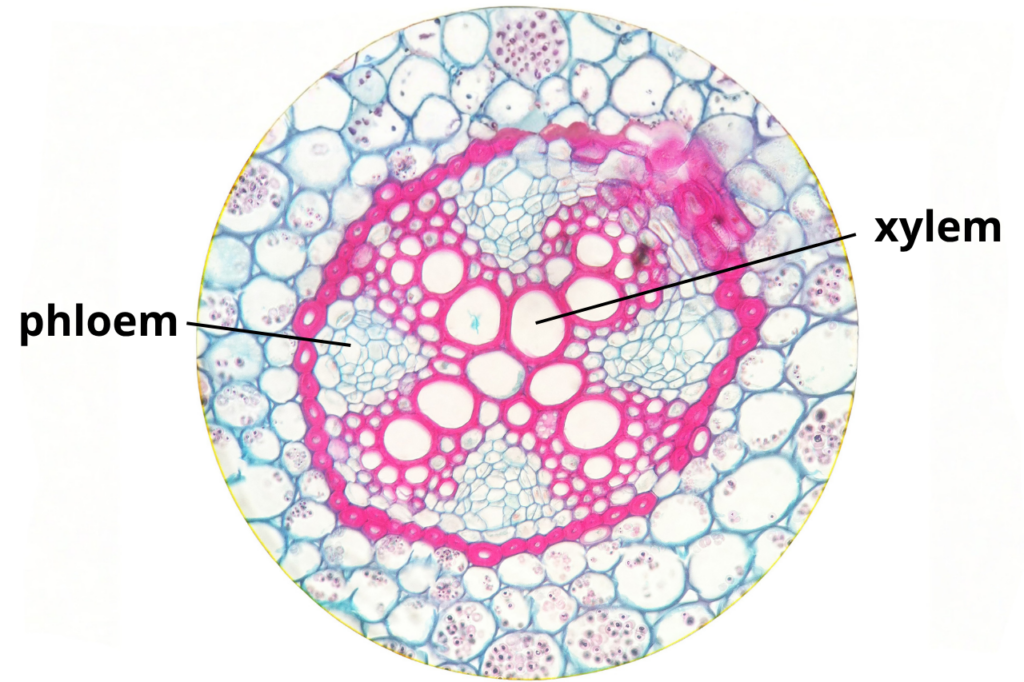
The xylem and phloem look slightly different depending on the type of plant. Flowering plants, for example, are divided into monocots (e.g. grasses and lilies) and dicots (e.g. deciduous trees and cotton plants) based on the number of leaves that develop from the first sprout.
Links
ReThink – Plant Knowledge
Magnus Ehingers undervisning – The stem and the transport 
May 2026, TÄNKOM | Revised August 2026, RETHINK


