• Skip to main content
  • Skip to footer

re-think.nu

  • About
    • Film
    • About Us
    • We are ReThink
    • Blog
      • Categories
        • Textile production
        • Textile consumption
        • Textile Recycling
        • Biodiversity
        • Earth’s resources
        • The Earth Spheres
        • Water
        • Organic
        • Chemicals
        • ReThink – Think Again
    • Tips
    • Links & Sources
      • Links
      • Textile Sources
      • Small Animals Sources
      • Plant Sources
      • Fungi Sources
  • TEXTILES
    • Textile Knowledge
    • Textile Recycling
    • Textile Dictionary
    • Rethink Fabric – Series
    • Fact Sheets
  • BIODIVERSITY
    • Small Animals
      • Small Animals Knowledge
      • Small Animals Dictionary
      • Small Animals Series
      • Small Animals Films
    • Plants
      • Plant Knowledge
      • Plant Dictionary
      • Think About Plants – The Spruce Tale
      • Films About Plants
    • Fungi
      • Fungi Knowledge
      • Fungi Dictionary
      • Fungi Film
      • ReThink Fungi
    • Microorganisms
  • Earth
    • Earth’s Spheres
    • Ecosystem – Biosphere
    • Resource Extraction – Industry
    • Earth Dictionary
  • DICTIONARY
  • CONTACT
    • Press
    • Support Us
    • Become a Member
    • Privacy policy
    • Donations & sponsorship
    • Collaborations
      • SIDA
      • Nature Conservation Society
      • Fabric to Fabric
      • Keep Sweden Clean
      • University of Linköping
  • Swedish
  • Instagram
  • Facebook
  • Youtube
  • Linkedin

regenerated fibres

Textile Knowledge

Circle of clothing from earth to earth

STEP 1.
RAW MATERIAL FOR TEXTILE MATERIALS

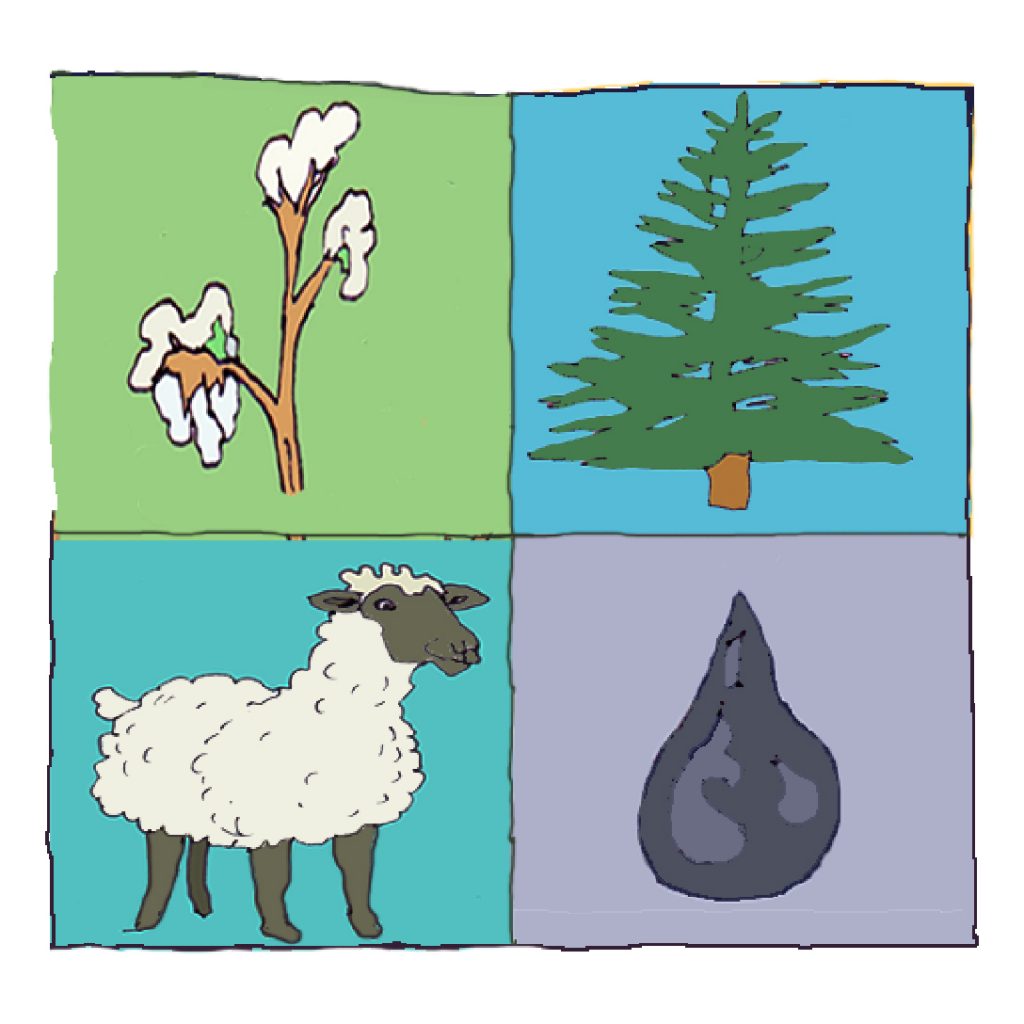
four squares stacked in a quadrat. Green background with cotton plant on upper left, blue background with green pine tree epper right. The bottom two squares have a blue square with a white lamb on left side and a black drop of oil with violet background on the right square.

Many different textile materials are involved when making our clothes. For example, cotton, linen, wool, viscose, and polyester often consist of mixtures of two or more textile fibres. Textile fibre

…

Viscose


Rayon, the earliest regenerated fibre, traces its origins to various processes, notably the viscose method, which originated in England in 1891, giving rise to the term ‘viscose.’ Commercial viscose production commenced in the USA in 1910 under the name ‘artificial …

Learn about Textiles, Part 2 – Thread Making

9 April, 2019 by asas

Thread manufacturing

Before spinning, natural fibres require carding to clean and parallel align the fibres. This process facilitates the creation of threads, and the quality of the thread is enhanced by longer fibres, resulting in finer and more durable threads.…

Learn about Textiles, part 1 – from Raw Materials to Textile Materials

2 April, 2019 by asas

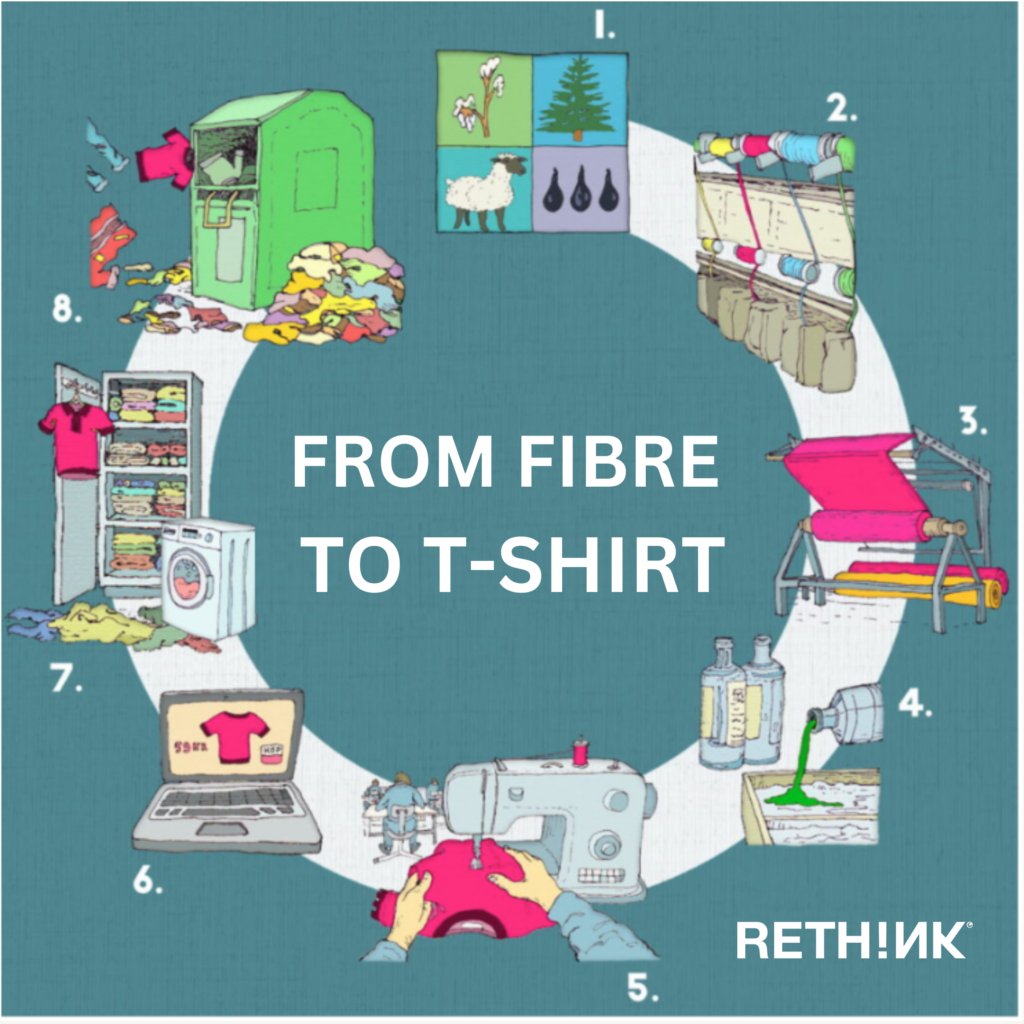
Welcome to our textile series! Throughout eight steps, we’ll provide you with comprehensive knowledge about textiles, starting from the source of raw materials and leading up to the processes involved in clothing recycling. Additionally, we’ll delve into the various challenges …

What are you wearing?

19 November, 2018 by admin

Dark hair girl in yellow orange layers. Wearing a lot of warm clothes

What’s really hanging in your closet? What are your clothes made of, and how do they affect the environment? Time for a short “what to wear” education.

AN INSIGHT INTO YOUR WARDROBE

Synthetic fibres are fibres that are manufactured artificially

…

Footer

  • Blog
  • ABOUT
  • Global Goals
  • Collaborations
  • About Us
  • Press
  • Instagram
  • Facebook
  • Youtube
  • Linkedin

Partly financed by

© re-think.nu | 2026

Copyright © 2026 · Atmosphere Pro on Genesis Framework · WordPress · Log in