• Skip to main content
  • Skip to footer

re-think.nu

  • About
    • Film
    • About Us
    • We are ReThink
    • Blog
      • Categories
        • Textile production
        • Textile consumption
        • Textile Recycling
        • Biodiversity
        • Earth’s resources
        • The Earth Spheres
        • Water
        • Organic
        • Chemicals
        • ReThink – Think Again
    • Tips
    • Links & Sources
      • Links
      • Textile Sources
      • Small Animals Sources
      • Plant Sources
      • Fungi Sources
  • TEXTILES
    • Textile Knowledge
    • Textile Recycling
    • Textile Dictionary
    • Rethink Fabric – Series
    • Fact Sheets
  • BIODIVERSITY
    • Small Animals
      • Small Animals Knowledge
      • Small Animals Dictionary
      • Small Animals Series
      • Small Animals Films
    • Plants
      • Plant Knowledge
      • Plant Dictionary
      • Think About Plants – The Spruce Tale
      • Films About Plants
    • Fungi
      • Fungi Knowledge
      • Fungi Dictionary
      • Fungi Film
      • ReThink Fungi
    • Microorganisms
  • Earth
    • Earth’s Spheres
    • Ecosystem – Biosphere
    • Resource Extraction – Industry
    • Earth Dictionary
  • DICTIONARY
  • CONTACT
    • Press
    • Support Us
    • Become a Member
    • Privacy policy
    • Donations & sponsorship
    • Collaborations
      • SIDA
      • Nature Conservation Society
      • Fabric to Fabric
      • Keep Sweden Clean
      • University of Linköping
  • Swedish
  • Instagram
  • Facebook
  • Youtube
  • Linkedin

Nature as Society’s Most Important Infrastructure

3 April, 2025 by Bente Nilssen

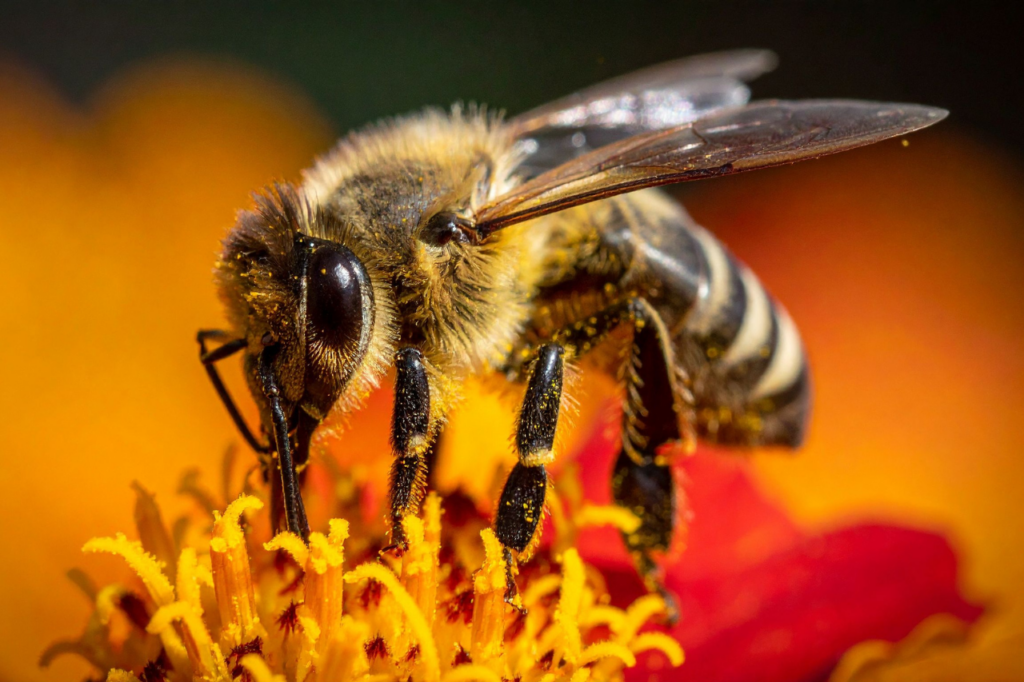
A brown and beige yellow striped bee sucks nectar from a red flower with yellow stamens. Oragnge and warm yellow blurred background.

When we hear the word ‘infrastructure’, many of us think of roads, railways, the electricity grid and the internet.
But over the past year, another form of infrastructure has become increasingly hard to ignore: Nature.

Without healthy soils, there can be no food production. Without pollinators, harvests decline. Without forests, wetlands and healthy watercourses, both water supplies, air quality and the ability of ecosystems to cope with change are affected.

Over the past year, issues relating to self-sufficiency and resilience have received increased attention in many countries. The debate often centres on energy, transport and production. At the same time, all these systems ultimately depend on nature’s ability to provide raw materials, clean water, fertile soil and stable ecosystems.

It is easy to take these things for granted. A road can be repaired. An electricity grid can be expanded. But a degraded ecosystem can take decades or centuries to recover.

At Tänk Om/ReThink, we therefore continue to highlight the link between consumption and natural resources to increase understanding of the systems that sustain us every day. The sustainable society of the future is not just about new technology or more efficient processes. It is also about caring for the infrastructure that nature has been building up over millions of years. It remains the foundation for everything else.

Filed Under: Biodiversity, Earth's resources Tagged With: biodiversity, nature, natures infrastructure

« Previous Post

Footer

  • Blog
  • ABOUT
  • Global Goals
  • Collaborations
  • About Us
  • Press
  • Instagram
  • Facebook
  • Youtube
  • Linkedin

Partly financed by

© re-think.nu | 2026

Copyright © 2026 · Atmosphere Pro on Genesis Framework · WordPress · Log in