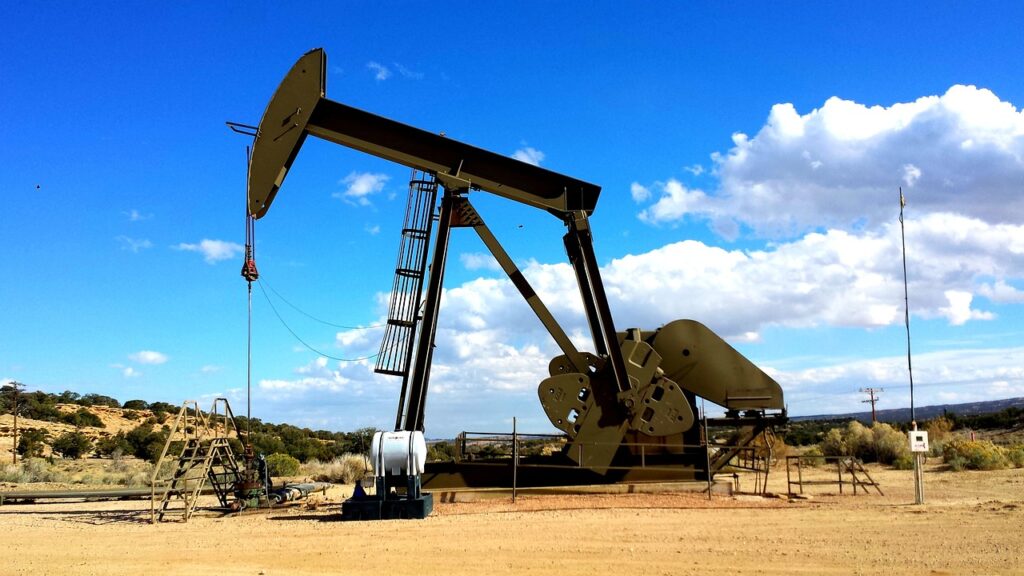
Fossil fuels, such as crude oil, are primarily made up of carbon and hydrogen atoms, forming hydrocarbons. These hydrocarbons come from the remains of plants, animals, and microorganisms living on earth millions of years ago. As these remains were buried under layers of sediment and rock, heat and pressure transformed them into fossil fuels. In simpler terms, crude oil and other fossil fuels are the result of decomposed organic matter. Today, we extract these resources by drilling deep into the Earth’s crust on land and beneath the ocean.
Crude oil plays a crucial role in textile production, especially in creating synthetic fibres like polyester, nylon, acrylic, elastane and vegan leather/polyurethane. These materials are derived from petroleum-based polymers, which, in reality, are forms of plastic.
Synthetic fabrics have grown in popularity because they are cheaper to produce and offer practical advantages, such as being lightweight, wrinkle-resistant, water- and stain-resistant, and durable. However, making these fibres relies heavily on crude oil, a major contributor to global warming due to the greenhouse gases released during production. Additionally, manufacturing synthetic textiles is resource-intensive, requiring large amounts of water and energy, and it involves chemicals that can be harmful to workers, the environment, and consumers. There are also concerns about the environmental impact of synthetic textiles during use and at the end of their life cycle, as they do not biodegrade and contribute to plastic pollution.
How can petroleum as a raw material transform into fibres?
Creating synthetic fibres requires a chemical plant or laboratory. The fibres are made through a process called polymerization, where chemicals link small molecules, called monomers, into rings or long chains. These rings or chains create large molecules known as polymers(many parts), which give synthetic fibres their structure.
Synthetic fibres are generally longer and more durable than natural fibres and can be mass-produced to almost any set of required properties.
Sources
Science Direct – Synthetic fibers from raw materials such as petroleum 
Earth Day – Fracking to Fashion. How does oil become fabric
October 2024, RETHINK


