• Skip to main content
  • Skip to footer

re-think.nu

  • About
    • Film
    • About Us
    • We are ReThink
    • Blog
      • Categories
        • Textile production
        • Textile consumption
        • Textile Recycling
        • Biodiversity & Ecosystem
        • Natural Resources
        • The Earth Spheres
        • Water
        • Organic
        • Chemicals
        • ReThink – Think Again
    • Tips
    • Links & Sources
      • Links
      • Textile Sources
      • Small Animals Sources
      • Plant Sources
      • Fungi Sources
  • TEXTILES
    • Textile Knowledge
    • Textile Recycling
    • Textile Dictionary
    • Rethink Fabric – Series
    • Fact Sheets
  • BIODIVERSITY
    • Small Animals
      • Small Animals Knowledge
      • Small Animals Dictionary
      • Small Animals Series
      • Small Animals Films
    • Plants
      • Plant Knowledge
      • Plant Dictionary
      • Think About Plants – The Spruce Tale
      • Films About Plants
    • Fungi
      • Fungi Knowledge
      • Fungi Dictionary
      • Fungi Film
      • ReThink Fungi
    • Microorganisms
  • Earth
    • Earth’s Spheres
    • Ecosystem – Biosphere
    • Resource Extraction – Industry
    • Earth Dictionary
  • DICTIONARY
  • CONTACT
    • Press
    • Support Us
    • Become a Member
    • Privacy policy
    • Donations & sponsorship
    • Collaborations
      • SIDA
      • Nature Conservation Society
      • Fabric to Fabric
      • Keep Sweden Clean
      • University of Linköping
  • Swedish
  • Instagram
  • Facebook
  • Youtube
  • Linkedin

Insects

Wetlands – Nurseries that purify our water

18 November, 2019 by asas

Wetlands are a broad concept that includes several different habitat types, such as bogs, beaches, marshes, and bogs. These environments are vital for many species, not least for our small animals and their eggs and larvae. A high incidence of …

More Small Animals – Richer Birdsong!

11 November, 2019 by asas

Eat as much as possible before eating yourself. It is life-threatening for most tiny animals, who often eat each other. Through evolution, small animals have invented various tricks to access their food. Take the oil beetles, for example. Their larvae …

When Farm Animals Thrive, the Need for Chemicals Decreases

28 October, 2019 by asas

How would you react if a double-tail suddenly came crawling over your foot? For example, the double tail has a fantastic task as a pest controller in our orchards. A single double-tail insect can eat thousands of aphids during its …

Pollination – no Side Effect

21 October, 2019 by asas

Dream back to a hot summer day for a short while. On the way home from the beach, you have just settled on an outdoor terrace for coffee and blueberry pie. You’re just about to take a bite when a …

Is Insecticide-Free Cotton Possible?

10 October, 2019 by asas

Honey bees produce honey and earthworms break down our compost – this is knowledge many of us know. But did you know that a ladybug can eat up to 2500 aphids during its lifetime? Or that flower flies are important pollinators? Without all …

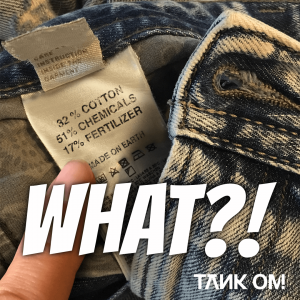
Hmm… Possible? … More than 100%?
19 February, 2019 by asas

No, of course not. But… to grow a kilo of cotton requires 1 to 1.5 kilos of chemicals and a pair of cotton pants weighs between 0.5 to 0.8 kilos [1], so…

For over an hour, these chemicals work …

  • Go to page 1
  • Go to page 2
  • Go to Next Page »

Footer

  • Blog
  • ABOUT
  • Global Goals
  • Collaborations
  • About Us
  • Press
  • Instagram
  • Facebook
  • Youtube
  • Linkedin

Partly financed by

© re-think.nu | 2026

Copyright © 2026 · Atmosphere Pro on Genesis Framework · WordPress · Log in