• Skip to main content
  • Skip to footer

re-think.nu

  • About
    • Film
    • About Us
    • We are ReThink
    • Blog
      • Categories
        • Textile production
        • Textile consumption
        • Textile Recycling
        • Biodiversity & Ecosystem
        • Natural Resources
        • The Earth Spheres
        • Water
        • Organic
        • Chemicals
        • ReThink – Think Again
    • Tips
    • Links & Sources
      • Links
      • Textile Sources
      • Small Animals Sources
      • Plant Sources
      • Fungi Sources
  • TEXTILES
    • Textile Knowledge
    • Textile Recycling
    • Textile Dictionary
    • Rethink Fabric – Series
    • Fact Sheets
  • BIODIVERSITY
    • Small Animals
      • Small Animals Knowledge
      • Small Animals Dictionary
      • Small Animals Series
      • Small Animals Films
    • Plants
      • Plant Knowledge
      • Plant Dictionary
      • Think About Plants – The Spruce Tale
      • Films About Plants
    • Fungi
      • Fungi Knowledge
      • Fungi Dictionary
      • Fungi Film
      • ReThink Fungi
    • Microorganisms
  • Earth
    • Earth’s Spheres
    • Ecosystem – Biosphere
    • Resource Extraction – Industry
    • Earth Dictionary
  • DICTIONARY
  • CONTACT
    • Press
    • Support Us
    • Become a Member
    • Privacy policy
    • Donations & sponsorship
    • Collaborations
      • SIDA
      • Nature Conservation Society
      • Fabric to Fabric
      • Keep Sweden Clean
      • University of Linköping
  • Swedish
  • Instagram
  • Facebook
  • Youtube
  • Linkedin

Terry

Terry is a fabric with loops of yarn on its surface. The loops, which are central to the structure of the fabric, are created by a double weave, i.e., two warp systems. The loops can be uncut, giving the fabric a soft and fuzzy surface. They can also be cut, meaning the loops are ‘cut’ and give the fabric a velvety surface.

Terry cloth is known for effectively absorbing moisture, making it particularly useful for products such as towels and bathrobes. It can also be used in clothing and furnishing materials such as carpets.
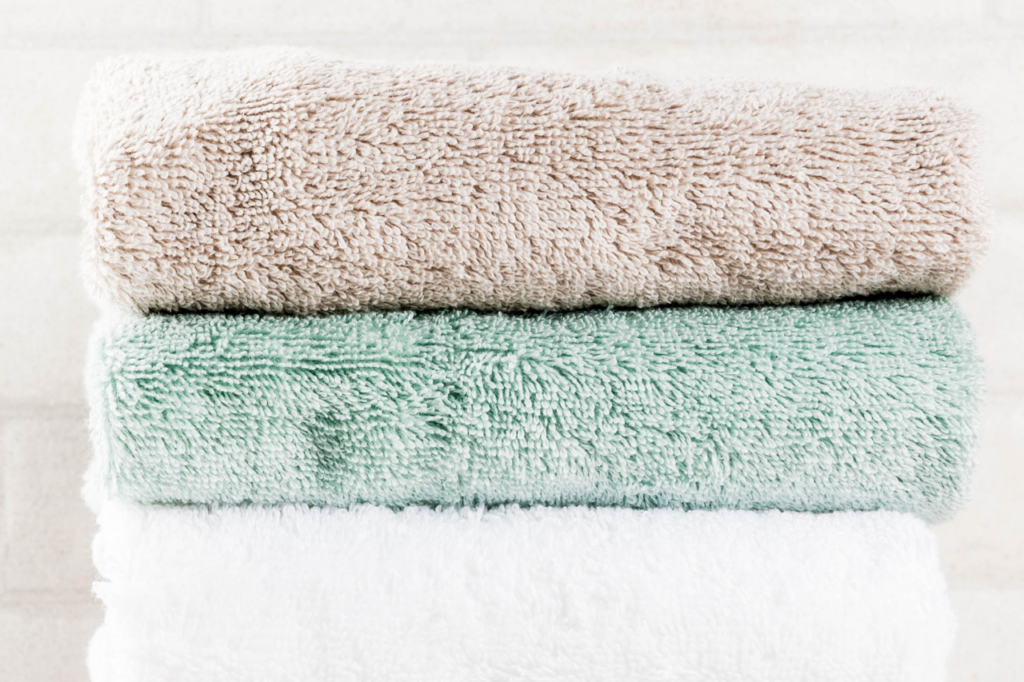
We can make terry from different materials, such as cotton or bamboo, and there are various terry fabrics, including single and double terry. Single terry has loops on only one side of the fabric, while double terry has loops on both sides.

We can also knit the terry. Woolpower’s wool terrycloth is an example, where one side is plain knit, and the other consists of terrycloth loops—combining the fluffy loops and the crinkly fibres of the wool results in a jersey that binds a lot of air, up to 80%. There are very few contact points with the body, which means that heat is retained, while the thin material and the properties of the fibres mean that moisture is transported away from the body.

Sources

FabricLink – Textile Dictionary  “”””
Heddels – All About Terry – The History & Importance of French Terry & Terrycloth  “”””
Woolpower – Ullfrotté Original  “”””

December 2023, TÄNKOM | Revised March 2024 RETHINK

Footer

  • Blog
  • ABOUT
  • Global Goals
  • Collaborations
  • About Us
  • Press
  • Instagram
  • Facebook
  • Youtube
  • Linkedin

Partly financed by

© re-think.nu | 2026

Copyright © 2026 · Atmosphere Pro on Genesis Framework · WordPress · Log in