• Skip to main content
  • Skip to footer

re-think.nu

  • About
    • Film
    • About Us
    • We are ReThink
    • Blog
      • Categories
        • Textile production
        • Textile consumption
        • Textile Recycling
        • Biodiversity & Ecosystem
        • Natural Resources
        • The Earth Spheres
        • Water
        • Organic
        • Chemicals
        • ReThink – Think Again
    • Tips
    • Links & Sources
      • Links
      • Textile Sources
      • Small Animals Sources
      • Plant Sources
      • Fungi Sources
  • TEXTILES
    • Textile Knowledge
    • Textile Recycling
    • Textile Dictionary
    • Rethink Fabric – Series
    • Fact Sheets
  • BIODIVERSITY
    • Small Animals
      • Small Animals Knowledge
      • Small Animals Dictionary
      • Small Animals Series
      • Small Animals Films
    • Plants
      • Plant Knowledge
      • Plant Dictionary
      • Think About Plants – The Spruce Tale
      • Films About Plants
    • Fungi
      • Fungi Knowledge
      • Fungi Dictionary
      • Fungi Film
      • ReThink Fungi
    • Microorganisms
  • Earth
    • Earth’s Spheres
    • Ecosystem – Biosphere
    • Resource Extraction – Industry
    • Earth Dictionary
  • DICTIONARY
  • CONTACT
    • Press
    • Support Us
    • Become a Member
    • Privacy policy
    • Donations & sponsorship
    • Collaborations
      • SIDA
      • Nature Conservation Society
      • Fabric to Fabric
      • Keep Sweden Clean
      • University of Linköping
  • Swedish
  • Instagram
  • Facebook
  • Youtube
  • Linkedin

Fleece

Cake piece illustration where one piece is about farming and husbandry. It's illustrating a lamb in front of another lamb


Fleece has become an all-round term for a fabric with many little loops brushed into a soft pile. The word fleece comes from the English language and refers to sheep’s wool’s appearance or formation. We also use the word fleece to describe the wool itself.

Today, fleece is most often associated with the polyester material invented in the 1970s by the Malden Mills company. The company initially made clothes out of wool and wanted to develop a replacement product that would not absorb moisture. By collaborating with the garment company Patagonia, they developed polyester fleece designed to mimic wool’s warming properties.
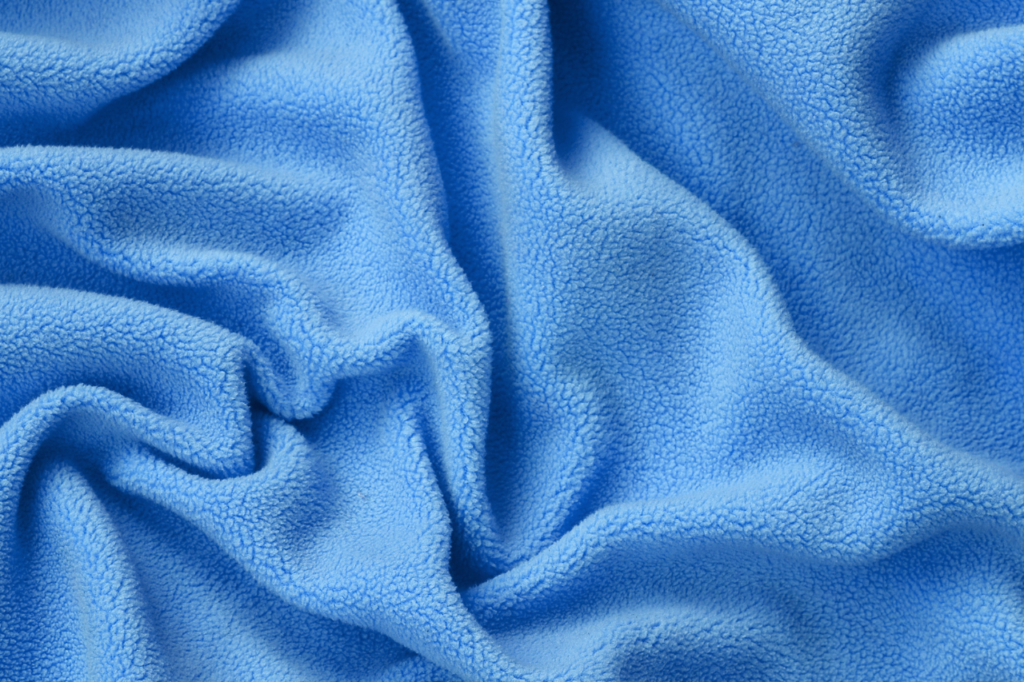
Since the term “fleece” refers to the appearance and the technique, fleece has been developed in different materials. such as cotton, “cotton fleece”, and hemp fleece, among others. It is also common to mix different types of fibres to achieve different feel, appearance, durability, etc. Polyester is the most common fibre used to make fleece, sometimes from (recycled) PET bottles. Like other petroleum-based materials, polyester fleece releases microplastics, a growing concern for nature and its ecosystems and biodiversity.

Fleece is generally warm, soft and light, depending on the material. It can be thick and fluffy, as in polar fleece, or thin, as in microfleece. It is often used to make sweaters, jackets, hats and mittens to keep warm in cold weather conditions.

Sources

Sewguide – Fleece fabric  “”””
Wikipedia – Polar fleece  “”””

November 2024, TÄNKOM | Revised November 2024, RETHINK

Footer

  • Blog
  • ABOUT
  • Global Goals
  • Collaborations
  • About Us
  • Press
  • Instagram
  • Facebook
  • Youtube
  • Linkedin

Partly financed by

© re-think.nu | 2026

Copyright © 2026 · Atmosphere Pro on Genesis Framework · WordPress · Log in