• Skip to main content
  • Skip to footer

re-think.nu

  • About
    • Film
    • About Us
    • We are ReThink
    • Blog
      • Categories
        • Textile production
        • Textile consumption
        • Textile Recycling
        • Biodiversity & Ecosystem
        • Natural Resources
        • The Earth Spheres
        • Water
        • Organic
        • Chemicals
        • ReThink – Think Again
    • Tips
    • Links & Sources
      • Links
      • Textile Sources
      • Small Animals Sources
      • Plant Sources
      • Fungi Sources
  • TEXTILES
    • Textile Knowledge
    • Textile Recycling
    • Textile Dictionary
    • Rethink Fabric – Series
    • Fact Sheets
  • BIODIVERSITY
    • Small Animals
      • Small Animals Knowledge
      • Small Animals Dictionary
      • Small Animals Series
      • Small Animals Films
    • Plants
      • Plant Knowledge
      • Plant Dictionary
      • Think About Plants – The Spruce Tale
      • Films About Plants
    • Fungi
      • Fungi Knowledge
      • Fungi Dictionary
      • Fungi Film
      • ReThink Fungi
    • Microorganisms
  • Earth
    • Earth’s Spheres
    • Ecosystem – Biosphere
    • Resource Extraction – Industry
    • Earth Dictionary
  • DICTIONARY
  • CONTACT
    • Press
    • Support Us
    • Become a Member
    • Privacy policy
    • Donations & sponsorship
    • Collaborations
      • SIDA
      • Nature Conservation Society
      • Fabric to Fabric
      • Keep Sweden Clean
      • University of Linköping
  • Swedish
  • Instagram
  • Facebook
  • Youtube
  • Linkedin

Coir


Coir, also known as coconut fibre [1], originates from the seed of the coconut tree. It forms the fibre mass between the outer and inner hard shells [2]. There is brown coconut fibre and white coconut fibre. The brown comes from mature coconuts and the white from immature coconuts. We use the brown coconut fibre to make burlap and for gardening, while we use white fibre for brushes, cords, ropes and fishing nets. Compared to cotton, coconut fibre is more robust but less flexible [4]. It withstands abrasion, water and weather well [1].
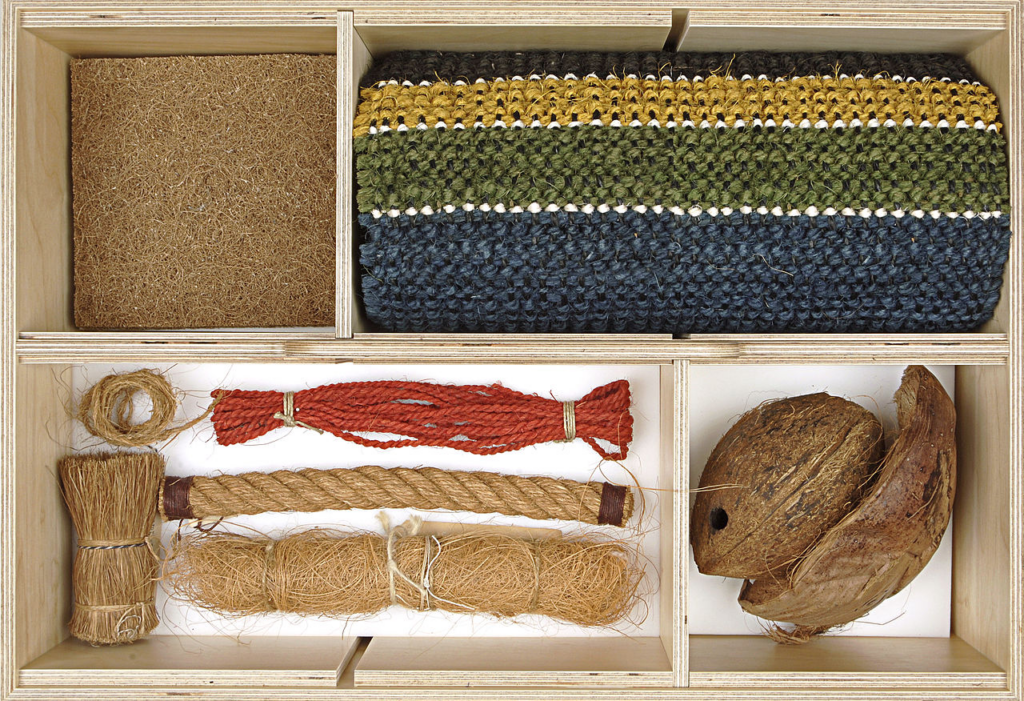
Photo: Wikipedia

India and Sri Lanka hold the distinction of being the primary producers of coconut fibre [3]. This versatile material applies to various products, including carpets, flooring, and brushes [1]. With its stiff, thread-like texture and coarse size, coconut fibre enables fabrics to showcase their weave, pattern, or design with remarkable clarity. Notably, coconut fibre flooring textiles are renowned for their exceptional durability.
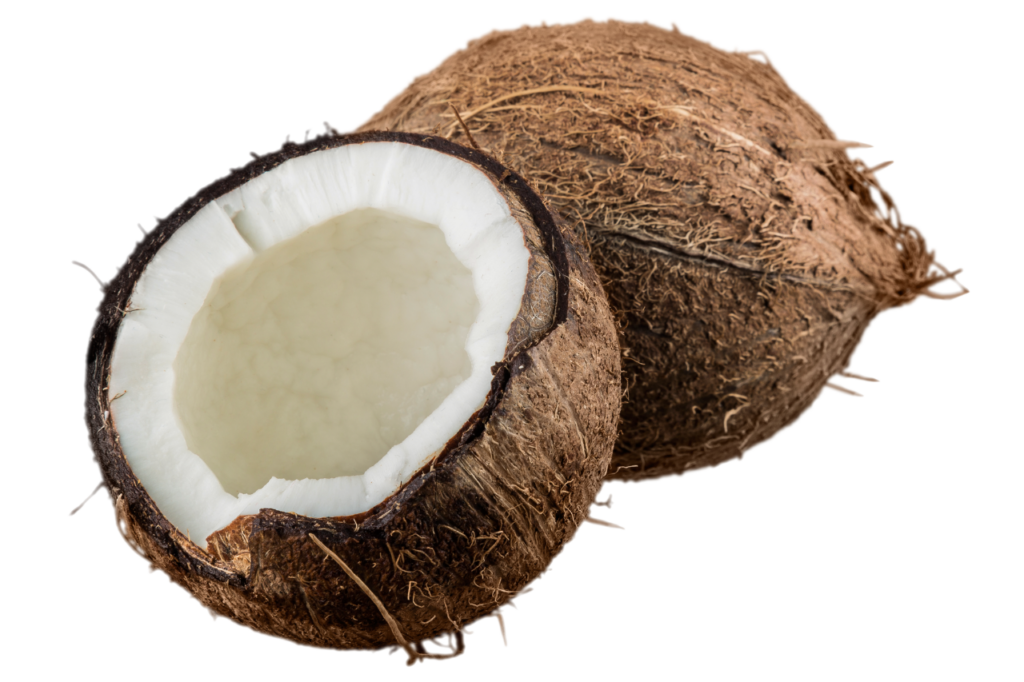
brown ripe coconut with inside view of white coconut meat

Photo: ABC.Net/Au News

Coir is often used to control erosion by weaving it into geotextiles [4]. Coconut fibre geotextiles can retain moisture and protect the soil from the sun’s rays so that new vegetation can form. They are durable and biodegradable. We can also use coconut fibre in upholstery or furniture covering. It can replace synthetic rubber or be combined with natural rubber to fill mattresses, car seats, sofas, etc.

Coir was named a “Future Fiber” by the United Nations, which focuses on finding natural and sustainable fibre alternatives to synthetic fibres [5].

Sources

  1. Coconut Fibres – Cargo Handbook  
  2. Wikipedia – COIR  
  3. Statista – Volume of coir products produced across India from financial year 2016 to 2023  
  4. Discover Natural Fibers Initiative (DNFI) – Coir  
  5. Food and Agriculture Organisation of the United Nations (FAO) – Why fibres of the future?  

September 2020, TÄNKOM | Revised May 2024 RETHINK

Footer

  • Blog
  • ABOUT
  • Global Goals
  • Collaborations
  • About Us
  • Press
  • Instagram
  • Facebook
  • Youtube
  • Linkedin

Partly financed by

© re-think.nu | 2026

Copyright © 2026 · Atmosphere Pro on Genesis Framework · WordPress · Log in