• Skip to main content
  • Skip to footer

re-think.nu

  • About
    • Film
    • About Us
    • We are ReThink
    • Blog
      • Categories
        • Textile production
        • Textile consumption
        • Textile Recycling
        • Biodiversity & Ecosystem
        • Natural Resources
        • The Earth Spheres
        • Water
        • Organic
        • Chemicals
        • ReThink – Think Again
    • Tips
    • Links & Sources
      • Links
      • Textile Sources
      • Small Animals Sources
      • Plant Sources
      • Fungi Sources
  • TEXTILES
    • Textile Knowledge
    • Textile Recycling
    • Textile Dictionary
    • Rethink Fabric – Series
    • Fact Sheets
  • BIODIVERSITY
    • Small Animals
      • Small Animals Knowledge
      • Small Animals Dictionary
      • Small Animals Series
      • Small Animals Films
    • Plants
      • Plant Knowledge
      • Plant Dictionary
      • Think About Plants – The Spruce Tale
      • Films About Plants
    • Fungi
      • Fungi Knowledge
      • Fungi Dictionary
      • Fungi Film
      • ReThink Fungi
    • Microorganisms
  • Earth
    • Earth’s Spheres
    • Ecosystem – Biosphere
    • Resource Extraction – Industry
    • Earth Dictionary
  • DICTIONARY
  • CONTACT
    • Press
    • Support Us
    • Become a Member
    • Privacy policy
    • Donations & sponsorship
    • Collaborations
      • SIDA
      • Nature Conservation Society
      • Fabric to Fabric
      • Keep Sweden Clean
      • University of Linköping
  • Swedish
  • Instagram
  • Facebook
  • Youtube
  • Linkedin

Plastic in Clothes – Really?

31 January, 2019 by asas

plastic and micro-plastic in clothes

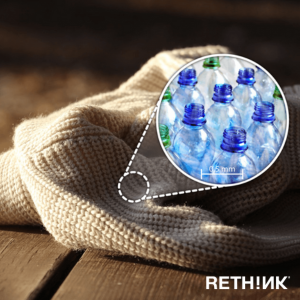
Yes, the fact is that most of your clothes contain “plastic”. Look at the label and what it says: polyester, nylon, lycra, elastane, and acrylic. These are common materials in our clothes and are usually called synthetic fibres. Synthetic fibres almost always come from fossil oil that is not renewable. Through chemical processes, we develop a spinning solution called granules. From this granulate, we make so-called filaments, i.e. long threads, which are either used as they are or cut short, imitating natural fibres and then spun into threads. Then, we can use the threads/yarns to weave or knit fabrics to make clothes or other textile products [1].

Small particles detach from these textiles with each wash. Some of these pass the treatment plants’ filters in the form of microplastics and reach our oceans. Synthetic fibres from washing (Swedish households) are estimated to release up to 17 tonnes of microplastics into the ocean yearly [2]. Unfortunately, the number is increasing with the growing clothing and textile industry.

But as always, we can all make a difference, in several ways, to reduce just these emissions:

• Air fresh the clothes rather than wash them.

• Use your clothes longer and buy used. New clothes release more fibre.

Use a wash bag or a particular wash ball that catches the fibres.

• Never use more detergent than instructed. Even detergents contain microplastics.

Most importantly, to minimize the amount of microplastics in the ocean, use natural materials like wool, cotton, and linen. Also, only wash when it’s necessary.

Sources

  1. Textileschool – Synthetic fibres are artificial fibres from synthetic polymers 
  2. IVL.SE – Swedish sources and pathways for microplastics to the marine environment 

Filed Under: Labelling, Synthetic fibres, Textile consumption Tagged With: detergents, elastane, granulate, lycra, nylon, ocean, plastic, polyester, textile industry

« Previous Post
Next Post »

Footer

  • Blog
  • ABOUT
  • Global Goals
  • Collaborations
  • About Us
  • Press
  • Instagram
  • Facebook
  • Youtube
  • Linkedin

Partly financed by

© re-think.nu | 2026

Copyright © 2026 · Atmosphere Pro on Genesis Framework · WordPress · Log in