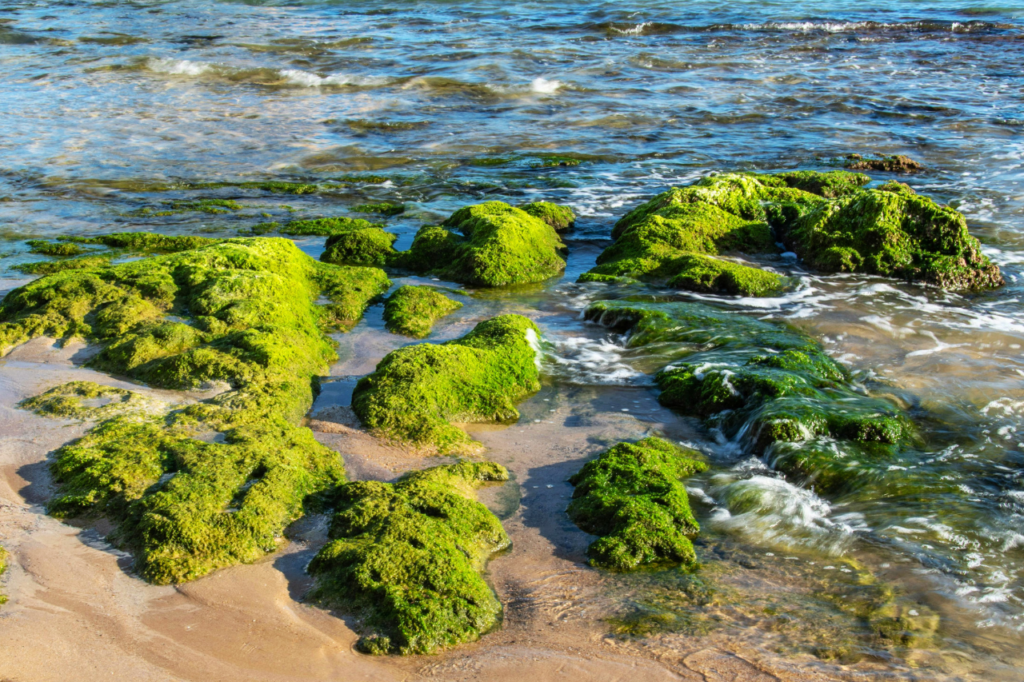
Green algaes was the first plants on Earth. The whole plant kingdom relied on the algaes and its ability to capture the sun’s energy and convert it into life. This is how the plant kingdom developed. Green algae live primarily in water like lakes, the sea and humid areas on land. They are mostly single-celled or thread-like, but can also form leaf-like colonies.
Unlike land plants, they have no roots, stems or leaves. The entire body of the algae, known as the thallus, takes care of all the plant’s functions. It absorbs water, nutrients and light directly from its surroundings.
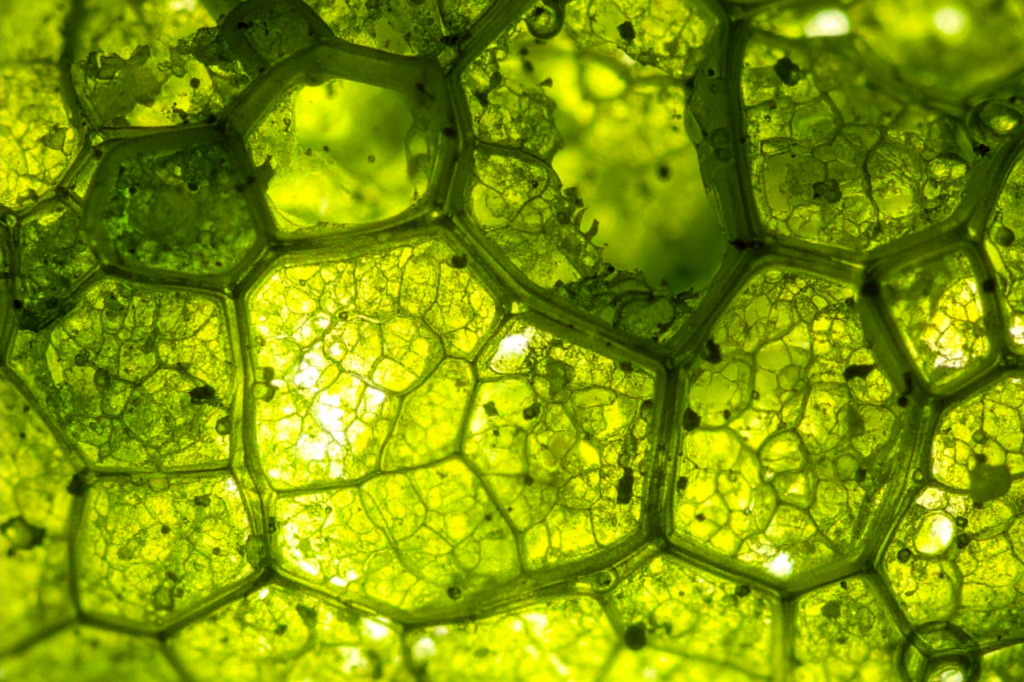
The chloroplasts inside cells are filled with chlorophyll, which gives the algae their green colour and enables them to carry out photosynthesis. In addition, many species contain other pigments that protect them from intense light or help capture light in deeper layers of water.
Green algae reproduce in several ways:
- Asexual, in the sense that parts of the cell divide into two and grow into new individuals.
- Sexual reproduction, where two cells fuse to form a new organism.
They play a crucial role in nature, both as producers of oxygen and as the foundation of the food chain in lakes and seas. A large proportion of the oxygen we breathe comes from microscopic green algae in the oceans.
Algae can be used to create textiles by either being processed into natural, biodegradable fibers or used as a sustainable source for natural dyes.
Source
April 2026, TÄNKOM | Revised July 2026, RETHINK


