• Skip to main content
  • Skip to footer

re-think.nu

  • About
    • Film
    • About Us
    • We are ReThink
    • Blog
      • Categories
        • Textile production
        • Textile consumption
        • Textile Recycling
        • Biodiversity & Ecosystem
        • Natural Resources
        • The Earth Spheres
        • Water
        • Organic
        • Chemicals
        • ReThink – Think Again
    • Tips
    • Links & Sources
      • Links
      • Textile Sources
      • Small Animals Sources
      • Plant Sources
      • Fungi Sources
  • TEXTILES
    • Textile Knowledge
    • Textile Recycling
    • Textile Dictionary
    • Rethink Fabric – Series
    • Fact Sheets
  • BIODIVERSITY
    • Small Animals
      • Small Animals Knowledge
      • Small Animals Dictionary
      • Small Animals Series
      • Small Animals Films
    • Plants
      • Plant Knowledge
      • Plant Dictionary
      • Think About Plants – The Spruce Tale
      • Films About Plants
    • Fungi
      • Fungi Knowledge
      • Fungi Dictionary
      • Fungi Film
      • ReThink Fungi
    • Microorganisms
  • Earth
    • Earth’s Spheres
    • Ecosystem – Biosphere
    • Resource Extraction – Industry
    • Earth Dictionary
  • DICTIONARY
  • CONTACT
    • Press
    • Support Us
    • Become a Member
    • Privacy policy
    • Donations & sponsorship
    • Collaborations
      • SIDA
      • Nature Conservation Society
      • Fabric to Fabric
      • Keep Sweden Clean
      • University of Linköping
  • Swedish
  • Instagram
  • Facebook
  • Youtube
  • Linkedin

Ecosystem

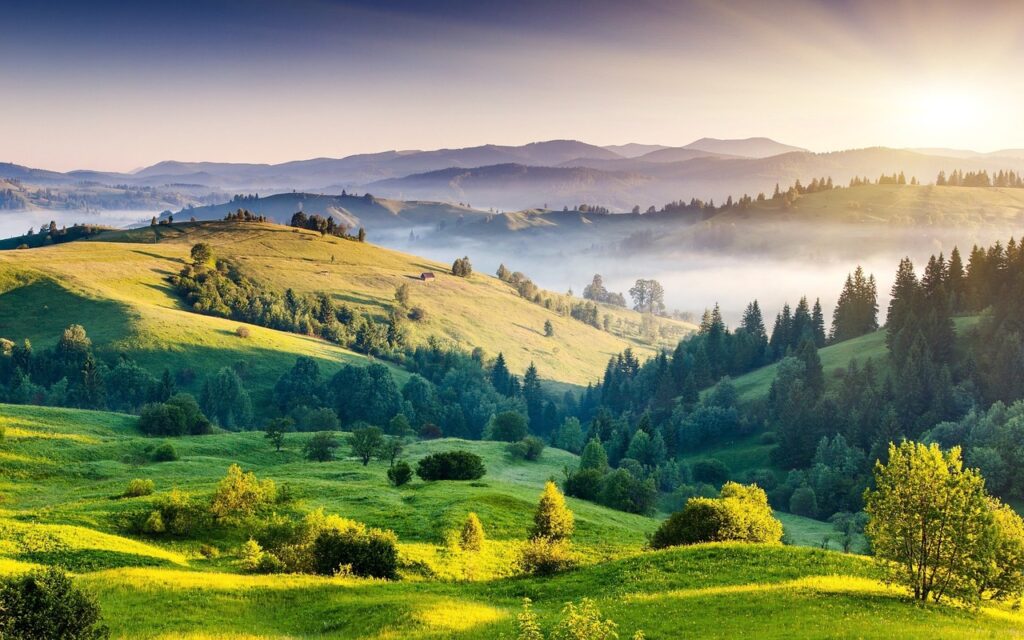
Illustrated image of hills, nature with green fields and mountains in the background

An ecosystem is a complex collection of living organisms and their surrounding physical environment, where these organisms interact with each other and the environment in different ways. It includes a specific area’s biotic (living) and abiotic (non-living) components. Ecosystems can range in size from small, such as puddles of water or tree roots, to massive, such as rainforests or deserts.

The living organisms in an ecosystem are any living single- or multi-celled creature with its metabolism, such as plants, animals, bacteria or fungi. These organisms depend on each other for food, water, shelter and reproduction. The non-living components include climate, temperature, humidity, soil composition and geographical location.

The ecosystem functions as a dynamic system where different species have specific roles and influence each other in different ways, creating a balance and a complex network of interactions. If one species disappears or environmental conditions change, a chain reaction can affect the whole ecosystem.

Ecosystems perform various functions, such as regulating nutrient cycles, purifying water and air, maintaining soil fertility, and providing habitats and resources for humans and other organisms. Human activities, both positive and negative, such as deforestation, pollution, climate change, and conservation efforts, can significantly impact ecosystems.

Sources

The Owls Biology – The Ecosystem – Ecology and how organisms interact in an ecosystem  “”””
National Geographic – Resource – ecosystem  “”””
Smithsonian – Ecosystems Ecology  “”””

October 2023, TÄNKOM | Revised January 2024 RETHINK

Footer

  • Blog
  • ABOUT
  • Global Goals
  • Collaborations
  • About Us
  • Press
  • Instagram
  • Facebook
  • Youtube
  • Linkedin

Partly financed by

© re-think.nu | 2026

Copyright © 2026 · Atmosphere Pro on Genesis Framework · WordPress · Log in