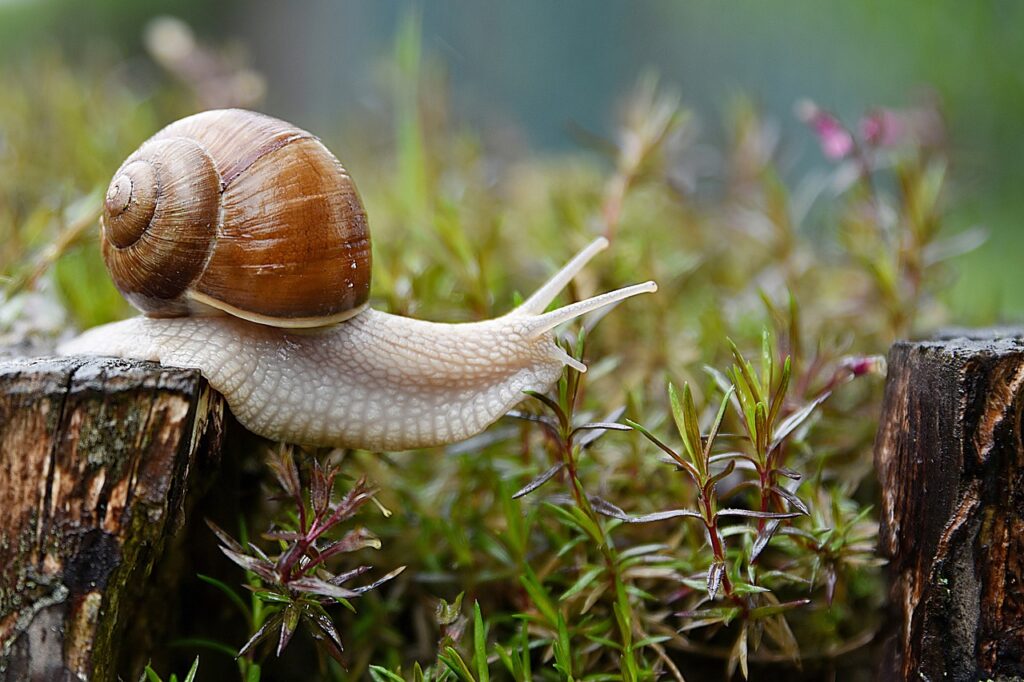
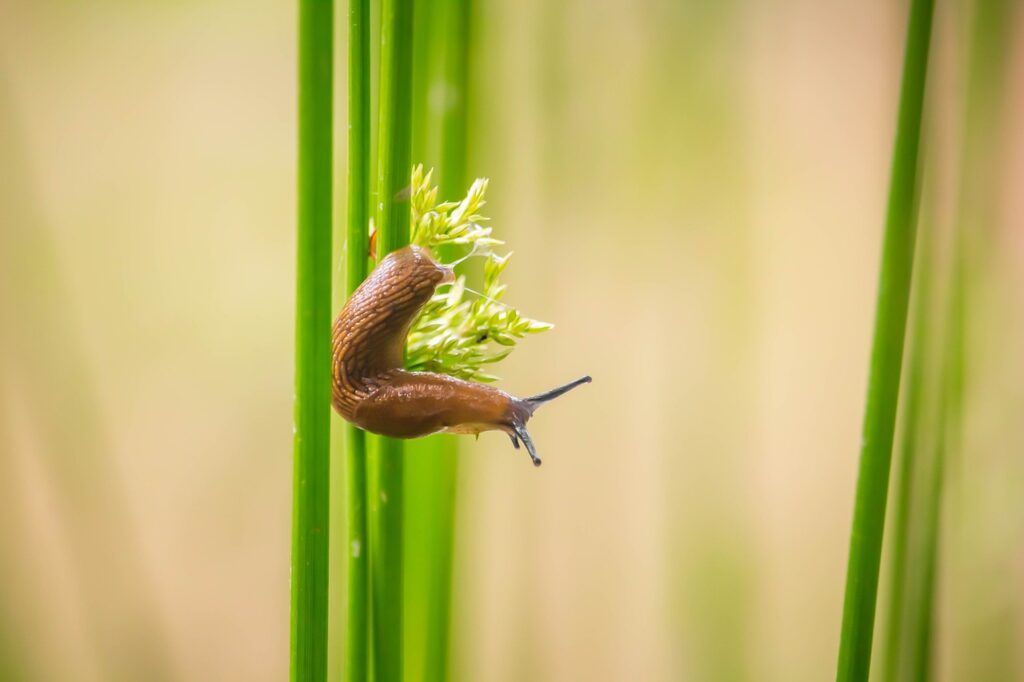
When we think of snails and slugs, we often believe that both shelled and unshelled are snails. However, the most basic fact is that slugs have no shells [1, 2].
In fact, all snails and slugs belong to the family of the air-breathing land snails and slugs (terrestrial pulmonate gastropod molluscs). Therefore, slugs are snails – but without a shell. Snails are also a polyphyletic group, which means there is no standard “original snail” that is the ancestor of all species. Slugs are snails that have abandoned their shells, which has happened several times throughout evolution. Forest snails, for example, are not closely related to cow snails, even though they look very similar. Both groups have evolved from different shell-bearing snails [1, 2, 3, 4].
Slugs and snails are classified as gastropods, with ‘gastro’ meaning stomach and ‘pod’ meaning foot. The name summarises their anatomy well. As voracious eaters, they glide along on a muscular foot, eating plants and creating slimy secretions as they walk [1].
One visible difference between these closely related pests is that snails have hard, protective outer shells. Some snails have soft inner shells or prominent mantles, while others have none. Both snails and slugs have two upper tentacles protruding from the forehead that are used for sight and smell, and on the tips are the eyes. Shorter, lower tentacles extending from their heads are for touch and taste [5].
To form shells properly, snails need calcium, which wild species get primarily from the soil. Those needs limit their range to areas where natural soil and weather conditions combine to keep soil calcium readily available. Their shells help them tolerate these often drier climates as well. Shell-less, unprotected slugs don’t need calcium like snails; they require moisture. They thrive where you find plenty of ground cover plants and objects such as old boards and rubbish [1, 4, 5, 6].
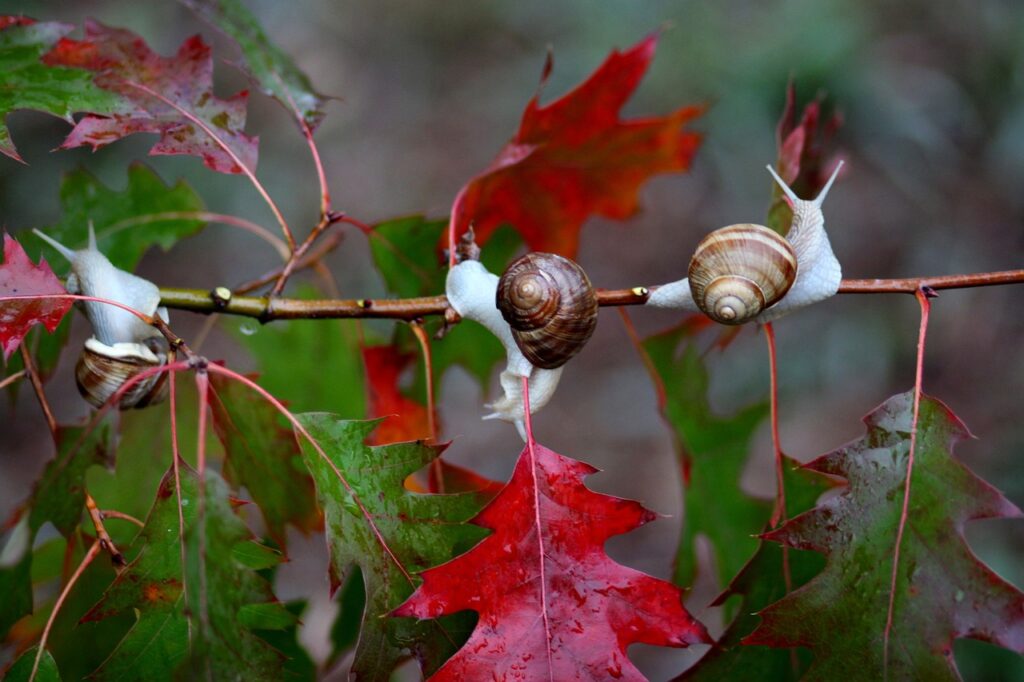
Slugs and snails are hermaphrodites and have genitalia of both sexes. Most species must mate with another snail or slug to lay eggs, while some reproduce asexually [2].
Many slug and snail pests that damage gardens are not native to the areas they inhabit. One of the best-known is the killer slug Arion vulgaris, also known as the Spanish forest slug (8). They significantly impact biodiversity as they eat other snail species and cause damage to most types of plants and vegetables, including strawberry crops [9].
Key functions
● Decomposes dead plant material into new soil
● Decomposes materials that are uncommon or difficult for other species to degrade
● Improves soil structure
● Useful animals important for biodiversity
● Food for other animals such as birds, hedgehogs, moles, amphibians, beetles and spiders
Common species
There are almost 50 species in the world, of which 24 snail species we can find in Scandinavia, and 20 are native to Sweden. Of these, 10 are non-native species, but only a few are considered invasive, i.e. they have good dispersal ability and mass reproduction, cause damage to ecosystems and are challenging to eradicate [7]. The most well-known invasive species is the killer snail.
Some species to discover in nature:
● Killer Snail (Arion vulgaris)
Artfakta – Killer snail 
● Black Slug (Arion ater)
Artfakta – Black wood snail
● Dusky Slug (Arion subfuscus)
Artfakta – Western Dusky Slug
● Lemon Slug (Malacolimax tenellus)
Artfakta – Lemon slug
● Arctic Field Slug (Deroceras agreste)
Artfakta – Deroceras Agreste
● River nerite (Theodoxus fluviatilis)
Artfakta – River Nerite
● Wandering Pond Snail (Ampullaceana balthica)
Artfakta – Wandering Pond Snail
● White-lipped Snail (Cepaea hortensis)
Artfakta – White lipped snail
● Burgundy Snail (Helix pomatia)
Artfakta – Burgundy Snail
Do you want to know more:
Artfakta – SLUGS
Artfakta – SNAILS
References
- Corry´s – All you need to know about slugs and snails
- Animal Spot – Snails
- Wikipedia – Slugs
- Diffen – Slug vs. Snail
- Escargot World – Slug vs Snail: What’s the REAL Difference?
- Agresearch – German Fact Sheet: Snails
- Uib – University in Bergen – Killer slugs vs. slug killers
- Artfakta – The Killer Snail
- Naturvårdsverket – Killer Snail
June 2023, TÄNKOM | Revised February 2024 RETHINK


