• Skip to main content
  • Skip to footer

re-think.nu

  • About
    • Film
    • About Us
    • We are ReThink
    • Blog
      • Categories
        • Textile production
        • Textile consumption
        • Textile Recycling
        • Biodiversity & Ecosystem
        • Natural Resources
        • The Earth Spheres
        • Water
        • Organic
        • Chemicals
        • ReThink – Think Again
    • Tips
    • Links & Sources
      • Links
      • Textile Sources
      • Small Animals Sources
      • Plant Sources
      • Fungi Sources
  • TEXTILES
    • Textile Knowledge
    • Textile Recycling
    • Textile Dictionary
    • Rethink Fabric – Series
    • Fact Sheets
  • BIODIVERSITY
    • Small Animals
      • Small Animals Knowledge
      • Small Animals Dictionary
      • Small Animals Series
      • Small Animals Films
    • Plants
      • Plant Knowledge
      • Plant Dictionary
      • Think About Plants – The Spruce Tale
      • Films About Plants
    • Fungi
      • Fungi Knowledge
      • Fungi Dictionary
      • Fungi Film
      • ReThink Fungi
    • Microorganisms
  • Earth
    • Earth’s Spheres
    • Ecosystem – Biosphere
    • Resource Extraction – Industry
    • Earth Dictionary
  • DICTIONARY
  • CONTACT
    • Press
    • Support Us
    • Become a Member
    • Privacy policy
    • Donations & sponsorship
    • Collaborations
      • SIDA
      • Nature Conservation Society
      • Fabric to Fabric
      • Keep Sweden Clean
      • University of Linköping
  • Swedish
  • Instagram
  • Facebook
  • Youtube
  • Linkedin

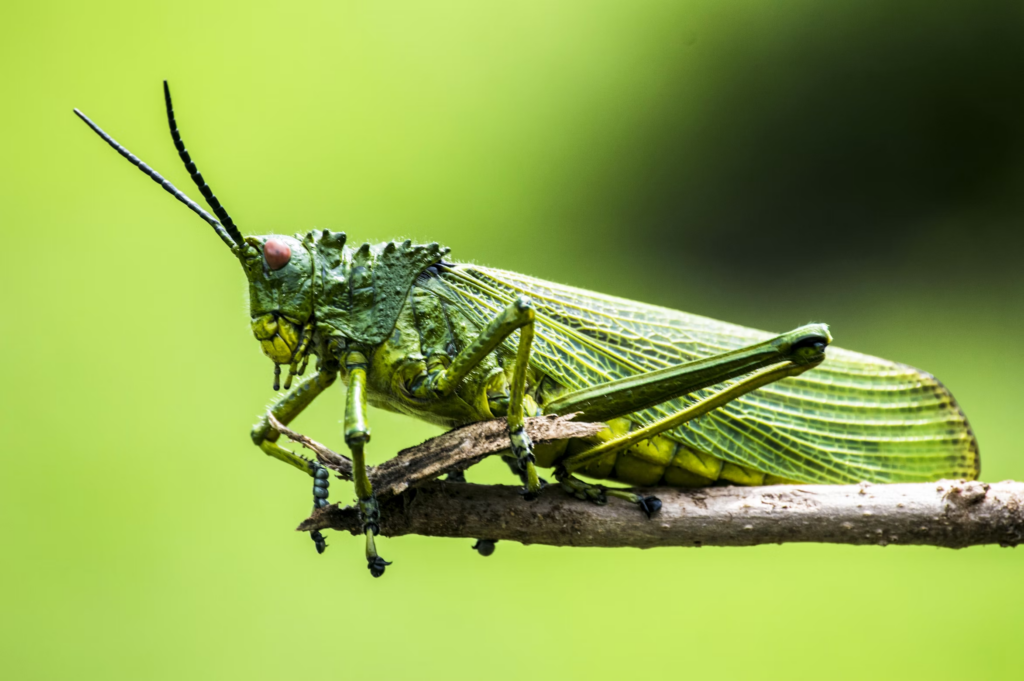
Grasshopper

Grasshopper Green bug on green image
Photo by Elegance Nairobi

Grasshoppers play a key role in food webs as both consumers and prey. Their plant-eating behaviour accelerates the transfer of energy and the recycling of nutrients, helping maintain the balance and health of ecosystems. They live in various habitats but are most abundant in lowland tropical forests, semi-arid areas and grasslands. Grasshoppers vary in colour from green to olive or brown and may have yellow or red markings.
In certain regions, people consume grasshoppers as a source of food. They are often dried, jellied, roasted and dipped in honey or ground into a meal.
Predators such as birds, frogs, and snakes control grasshoppers in the wild. People use insecticides and poison baits to prevent them from becoming a pest.

Sources

Thoughtco.com – 10 Fascinating Facts About Grasshoppers “”””
Britannica – Grasshopper – Insect  “”””

May 2022, TÄNKOM | Revised February 2024 RETHINK

Footer

  • Blog
  • ABOUT
  • Global Goals
  • Collaborations
  • About Us
  • Press
  • Instagram
  • Facebook
  • Youtube
  • Linkedin

Partly financed by

© re-think.nu | 2025

Copyright © 2025 · Atmosphere Pro on Genesis Framework · WordPress · Log in