• Skip to main content
  • Skip to footer

re-think.nu

  • About
    • Film
    • About Us
    • We are ReThink
    • Blog
      • Categories
        • Textile production
        • Textile consumption
        • Textile Recycling
        • Biodiversity & Ecosystem
        • Natural Resources
        • The Earth Spheres
        • Water
        • Organic
        • Chemicals
        • ReThink – Think Again
    • Tips
    • Links & Sources
      • Links
      • Textile Sources
      • Small Animals Sources
      • Plant Sources
      • Fungi Sources
  • TEXTILES
    • Textile Knowledge
    • Textile Recycling
    • Textile Dictionary
    • Rethink Fabric – Series
    • Fact Sheets
  • BIODIVERSITY
    • Small Animals
      • Small Animals Knowledge
      • Small Animals Dictionary
      • Small Animals Series
      • Small Animals Films
    • Plants
      • Plant Knowledge
      • Plant Dictionary
      • Think About Plants – The Spruce Tale
      • Films About Plants
    • Fungi
      • Fungi Knowledge
      • Fungi Dictionary
      • Fungi Film
      • ReThink Fungi
    • Microorganisms
  • Earth
    • Earth’s Spheres
    • Ecosystem – Biosphere
    • Resource Extraction – Industry
    • Earth Dictionary
  • DICTIONARY
  • CONTACT
    • Press
    • Support Us
    • Become a Member
    • Privacy policy
    • Donations & sponsorship
    • Collaborations
      • SIDA
      • Nature Conservation Society
      • Fabric to Fabric
      • Keep Sweden Clean
      • University of Linköping
  • Swedish
  • Instagram
  • Facebook
  • Youtube
  • Linkedin

Dung Beetles

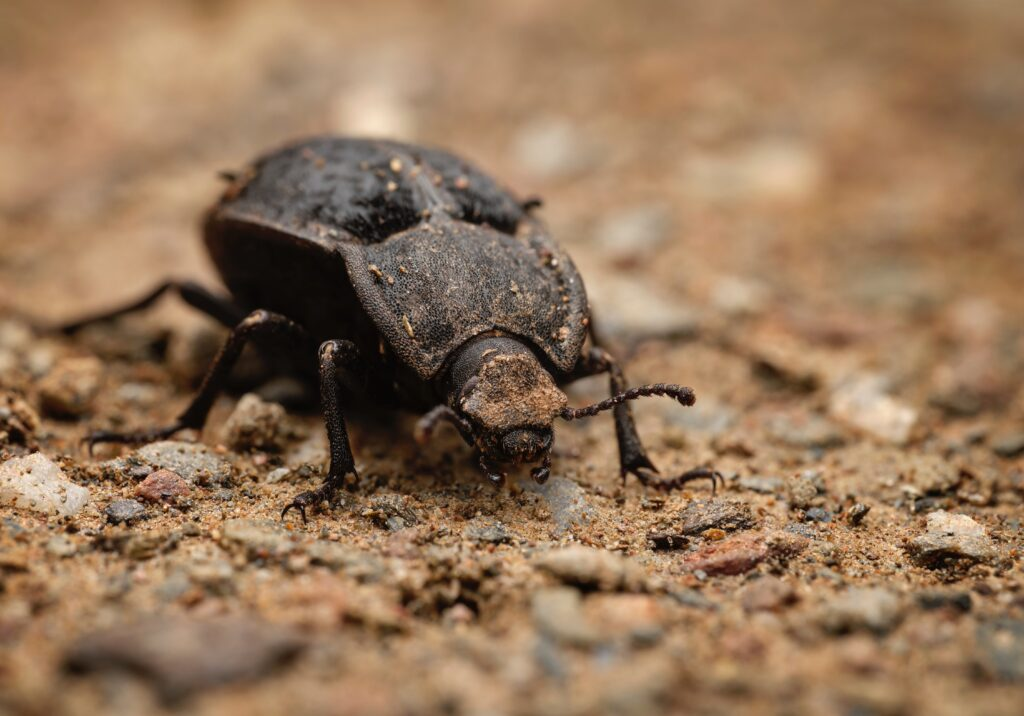
brown dung beetle on dry grass or soil background
Photo by Victor Grabarczyk

Dung beetles are beetles that thrive in pastures, and both live in and eat dung (poo from cows and other animals) and are very important for the environment. Dung beetles break down organic matter, plant cow dung and convert it into nutrients for the soil. Thus, it also helps to reduce methane emissions in the environment [1].

Both larvae and adults live in dung, but different types prefer various environments and conditions. They can live in forests, open pastures, dry and sandy soils, and in dung from specific animals, such as only cows, horses or sheep. Some dung beetles are heat-dependent, favouring sunny locations [2].

Due to a lack of habitat and too few cows, dung beetles are endangered [1]. They are also threatened by chemicals and pharmaceuticals increasing in the dung, affecting dung beetle larvae [3].

Key Functions

● Grazing fields

● Transforming dung into nutrients

● Food for other animals

Threat

● Industrialised livestock

● Fewer and poorer grazing lands

● Reduction of habitats

● Chemicals and pharmaceuticals in the dung

Common species

We estimate that there are about 7,000 different species of dung beetles in the World. In Sweden alone, about 70 species.
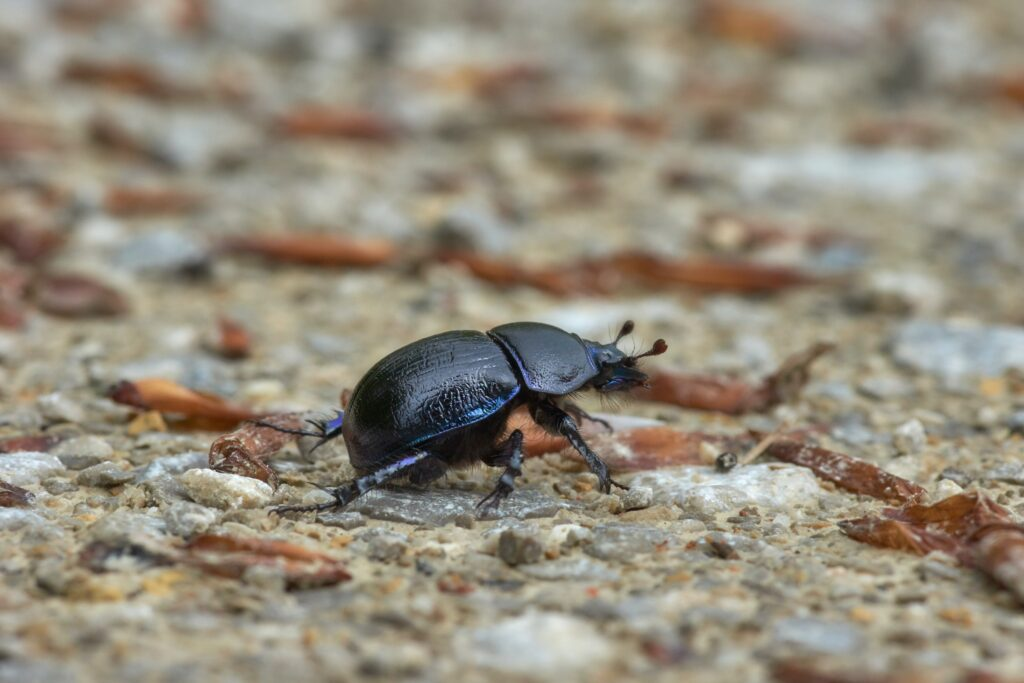
brown and black insect, beetle on the sandy ground
Photo by Wolfgang Hasselmann

Sources

  1. Earth.com – Dung beetles may sound gross, but here’s why they’re important to ecosystems 
  2. Britannica – Dung beetles and their habitat 
  3. Western Newland – The endangered climate fighter that eats excrement – the life of dung beetles is documented in Hankö 

May 2022, TÄNKOM | Revised January 2024 RETHINK

Footer

  • Blog
  • ABOUT
  • Global Goals
  • Collaborations
  • About Us
  • Press
  • Instagram
  • Facebook
  • Youtube
  • Linkedin

Partly financed by

© re-think.nu | 2026

Copyright © 2026 · Atmosphere Pro on Genesis Framework · WordPress · Log in