• Skip to main content
  • Skip to footer

re-think.nu

  • About
    • Film
    • About Us
    • We are ReThink
    • Blog
      • Categories
        • Textile production
        • Textile consumption
        • Textile Recycling
        • Biodiversity
        • Earth’s resources
        • The Earth Spheres
        • Water
        • Organic
        • Chemicals
        • ReThink – Think Again
    • Tips
    • Links & Sources
      • Links
      • Textile Sources
      • Small Animals Sources
      • Plant Sources
      • Fungi Sources
  • TEXTILES
    • Textile Knowledge
    • Textile Recycling
    • Textile Dictionary
    • Rethink Fabric – Series
    • Fact Sheets
  • BIODIVERSITY
    • Small Animals
      • Small Animals Knowledge
      • Small Animals Dictionary
      • Small Animals Series
      • Small Animals Films
    • Plants
      • Plant Knowledge
      • Plant Dictionary
      • Think About Plants – The Spruce Tale
      • Films About Plants
    • Fungi
      • Fungi Knowledge
      • Fungi Dictionary
      • Fungi Film
      • ReThink Fungi
    • Microorganisms
  • Earth
    • Earth’s Spheres
    • Ecosystem – Biosphere
    • Resource Extraction – Industry
    • Earth Dictionary
  • DICTIONARY
  • CONTACT
    • Press
    • Support Us
    • Become a Member
    • Privacy policy
    • Donations & sponsorship
    • Collaborations
      • SIDA
      • Nature Conservation Society
      • Fabric to Fabric
      • Keep Sweden Clean
      • University of Linköping
  • Swedish
  • Instagram
  • Facebook
  • Youtube
  • Linkedin

Stomata

Stomata are microscopic pores found mainly on the underside of plant leaves that facilitate gas exchange for photosynthesis. Stomatal opening is the process by which these pores widen and open.
Carbon dioxide is taken up by the leaf through the stomata and transported to chloroplasts filled with the pigment chlorophyll. Here, it is converted into glucose using sunlight and water. At the same time, oxygen is released through the stomata as a by-product of photosynthesis.
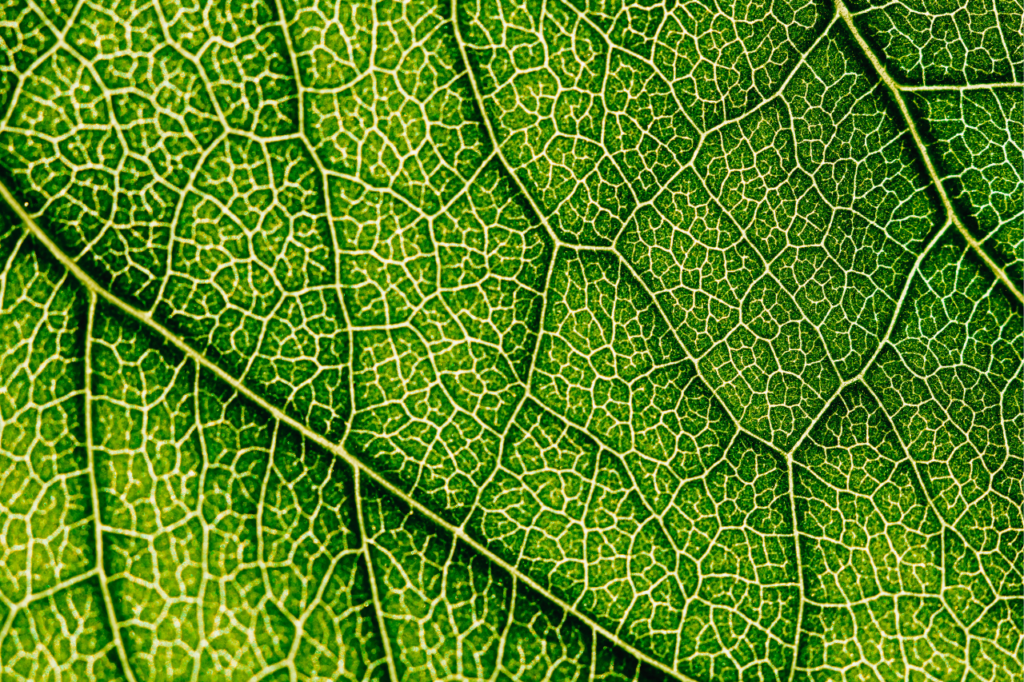
Greeen leaf with it's structure with nerves and threads. Darker and lighter green shows the intricate pattern of the leaf.
Close-up of a leaf filled with chlorophyll
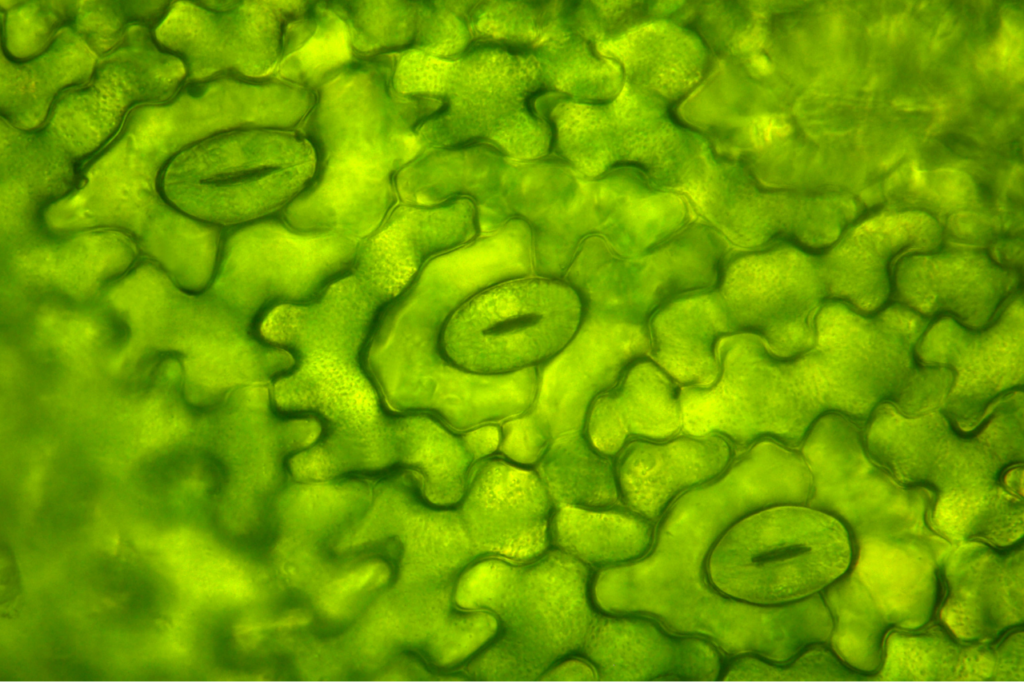
Green cell or worm alike also looks like sausages. Highly enlarged.
Highly enlarget stomata

As water vapour also evaporates through the stomata, the plant can control when they open and close to prevent dehydration. The regulation of the openings is also governed by light intensity, carbon dioxide levels and the plant’s access to water. The two cells that surround the stomatal opening and control the inflow and outflow are called guard cells or lip cells, and look like tiny mouths.

The reason why the stomatal openings, also known as stomata, are usually found on the underside of leaves is that the shade reduces transpiration. This also protects the pores from becoming clogged with dirt and debris. However, in certain conifers, such as some species of spruce, they can be found on all surfaces.

Links

ReThink – Plant Knowledge
Britannica – Stomate 
Youtube – Stamata Function 
Wikipedia – Guard Cells 

May 2026, TÄNKOM | Revised August 2026, RETHINK

Footer

  • Blog
  • ABOUT
  • Global Goals
  • Collaborations
  • About Us
  • Press
  • Instagram
  • Facebook
  • Youtube
  • Linkedin

Partly financed by

© re-think.nu | 2026

Copyright © 2026 · Atmosphere Pro on Genesis Framework · WordPress · Log in