• Skip to main content
  • Skip to footer

re-think.nu

  • About
    • Film
    • About Us
    • We are ReThink
    • Blog
      • Categories
        • Textile production
        • Textile consumption
        • Textile Recycling
        • Biodiversity & Ecosystem
        • Natural Resources
        • The Earth Spheres
        • Water
        • Organic
        • Chemicals
        • ReThink – Think Again
    • Tips
    • Links & Sources
      • Links
      • Textile Sources
      • Small Animals Sources
      • Plant Sources
      • Fungi Sources
  • TEXTILES
    • Textile Knowledge
    • Textile Recycling
    • Textile Dictionary
    • Rethink Fabric – Series
    • Fact Sheets
  • BIODIVERSITY
    • Small Animals
      • Small Animals Knowledge
      • Small Animals Dictionary
      • Small Animals Series
      • Small Animals Films
    • Plants
      • Plant Knowledge
      • Plant Dictionary
      • Think About Plants – The Spruce Tale
      • Films About Plants
    • Fungi
      • Fungi Knowledge
      • Fungi Dictionary
      • Fungi Film
      • ReThink Fungi
    • Microorganisms
  • Earth
    • Earth’s Spheres
    • Ecosystem – Biosphere
    • Resource Extraction – Industry
    • Earth Dictionary
  • DICTIONARY
  • CONTACT
    • Press
    • Support Us
    • Become a Member
    • Privacy policy
    • Donations & sponsorship
    • Collaborations
      • SIDA
      • Nature Conservation Society
      • Fabric to Fabric
      • Keep Sweden Clean
      • University of Linköping
  • Swedish
  • Instagram
  • Facebook
  • Youtube
  • Linkedin

Yeast Fungi

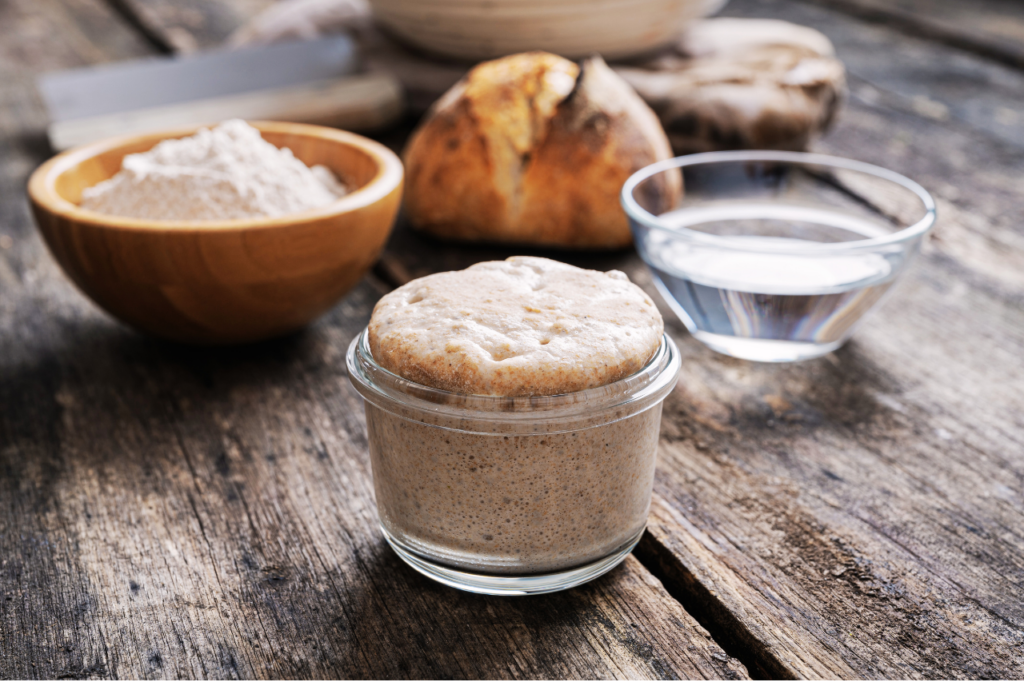
Sourdough from yeast fungus

Yeast fungi, which include around 600 different species, can utilise the energy in sugar without using oxygen. This process is called fermentation. Sourdough bakers almost always bake with wild yeast, i.e. yeast cells found in the air around us, but the yeast you can buy in the shop is of the species Saccharomyces Cerevisiae. The yeasts contribute at least 600 different chemical components, which strongly contribute to the characteristic flavour of the bread. It is the carbon dioxide released by the consumption of sugar that makes the dough grow during baking.

Yeast fungi have also proved helpful in the energy sector. Since we produce ethanol when yeasts process sugar, bioethanol is produced from sugar beet and sugar cane, for example.

Sources

Scientific American – The Mycelium Revolution Is upon Us “”””
Sciencedirect – Contribution of yeast and biomass for industrially essential materials “”””
Marcus Rosenlund (2022) – Det stora lilla live 

February 2024, TÄNKOM | Revised March 2024 RETHINK

Footer

  • Blog
  • ABOUT
  • Global Goals
  • Collaborations
  • About Us
  • Press
  • Instagram
  • Facebook
  • Youtube
  • Linkedin

Partly financed by

© re-think.nu | 2026

Copyright © 2026 · Atmosphere Pro on Genesis Framework · WordPress · Log in